Get Full Government Meeting Transcripts, Videos, & Alerts Forever!
Get email alerts on the Transportation topic
No spam. Unsubscribe anytime.
Council tables condemnation action for Southwest Eaton Boulevard to next meeting
Summary
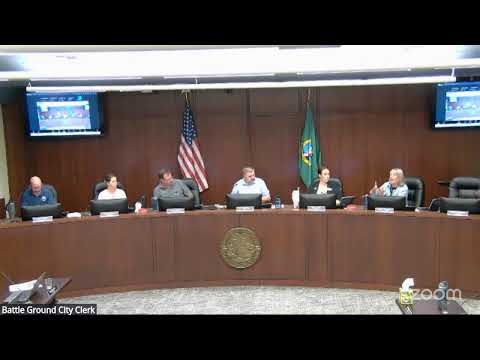
Council heard a staff presentation explaining right-of-way needs and eminent-domain statutes for the Eaton Boulevard project, then voted to table final condemnation ordinances (2026-02 and 2026-14) to the next meeting after council members requested more information and private follow-up with staff.
City staff described the Southwest Eaton Boulevard reconnection project and the specific right‑of‑way acquisitions the city needs to complete design and construction. Project materials described a corridor upgrade from SR 503 to Southwest 20th Avenue with new signalization, bike lanes, sidewalks and stormwater features; staff said roughly $3 million in state and federal design and right‑of‑way grants are in-hand and the city has applied for additional Safe Streets for All funding.
City legal counsel described applicable Washington statutes (RCW 8.12 and RCW 8.25) governing condemnation authority, explained that final action is required to authorize initiation of condemnation when negotiations have reached impasse, and said the process is intended to secure public purpose and just compensation. Several councilmembers asked clarification questions about negotiation status and litigation cost exposure. After discussion a motion to table the ordinances authorizing condemnation was seconded and passed; staff said tabling allows time to provide additional information and to hold follow-up briefings outside the open meeting when necessary.
Why it matters: The project addresses a corridor the city identifies as a high accident corridor and is funded partly with state and federal grants; tabling postpones a formal step that would enable the city to pursue condemnation if negotiations fail.