Get Full Government Meeting Transcripts, Videos, & Alerts Forever!
Get email alerts on the Governance topic
No spam. Unsubscribe anytime.
Planning staff trains commission on defensible findings: make decisions tied to code and measurable evidence
Summary
Assistant Director Angela Foos led a training session emphasizing that planning commissioners must base decisions on code and measurable evidence, avoid advocacy or vague conditions, and draft enforceable, proportional conditions tied to project impacts.
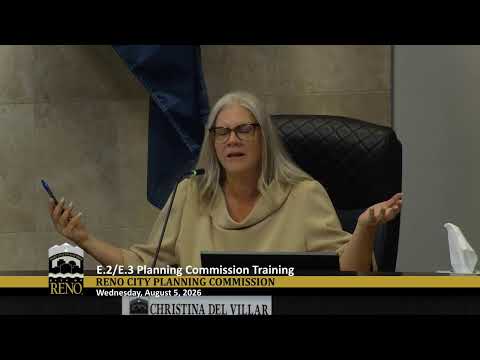
Assistant Director Angela Foos led the commission in a training on making defensible land-use findings. Foos told commissioners that their role is not to act as subject-matter experts but to weigh staff reports, public testimony and technical evidence and to make findings tied to law and measurable facts.
"Findings aren't that black and white," Foos said, adding that commissioners should point to code sections, traffic or noise studies, or other technical evidence when they say a project does or does not meet a given finding. She emphasized the importance of enforceable, measurable conditions and cautioned against adding conditions without a clear nexus to the project's impacts, citing noise-decibel thresholds and traffic-level-of-service standards as examples of measurable criteria. Foos also walked through the difference between entitlement-level review (high-level site and land-use issues) and building-permit review (technical, structure-level checks by building and fire departments).
Commissions asked for practical improvements in staff reports, including a short procedural history of negotiations and the specific concessions made during pre-application review to help commissioners and the public follow how a project changed before the hearing. Foos and staff agreed such clarifications would be helpful in future reports.