Get Full Government Meeting Transcripts, Videos, & Alerts Forever!
Get email alerts on the Autism Acceptance topic
No spam. Unsubscribe anytime.
Families ask McFarland for more inclusive programs as council proclaims Autism Acceptance Month
Summary
Advocates accepted an Autism Acceptance Month proclamation and urged expanded inclusive programming, including an adaptive run and local special-needs sports; police and staff described a voluntary special-needs emergency information form to help officers respond to calls.
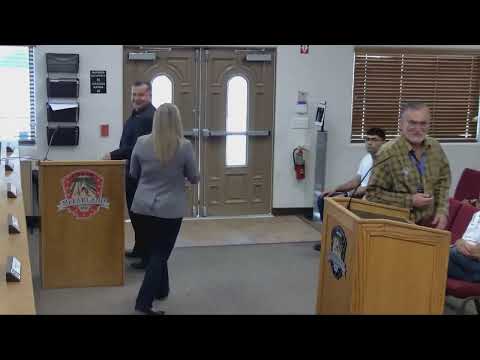
The council proclaimed April 2026 as Autism Acceptance Month, and special-needs advocates used the opportunity to press for inclusive programming and supports in McFarland.
"I stand here not only as a mother of a nonverbal child, but as a voice for many families in our community," Asi Arias told the council, urging more local services and proposing an adaptive component to the McFarland USA run so children with special needs can participate. Maria Diaz described creating a local 'Challengers' team that has grown to about 34 families and currently serves children ages 4–22 at Blanco Park; she thanked the city for waiving field fees to support the program.
Organizers including Mr. White outlined plans for a 1-mile adaptive run at Blanco Park to start at about 7:00 a.m., with the larger 5K/10K events to follow; Mr. White said organizers planned shirts and medals and had prepared for roughly 500 student participants. Staff said the city would try to limit charges for caregivers to improve access.
On public safety, the police chief described a voluntary special-needs emergency information program that would store details — medical conditions, medication, communication methods and triggers — in the dispatch/RIMS system so responding officers can "slow situations down" and tailor their approach. "Our goal is to mitigate these situations, not escalate," the chief said. Community Development Director Megan Snyder said the form is voluntary, drawn from a Tehachapi model, and that the city can provide yard-sticker or signage options and will continue to work with families and partners.
Council members thanked advocates and directed staff to follow up on coordination with the school district and event logistics.