Get Full Government Meeting Transcripts, Videos, & Alerts Forever!
Get email alerts on the Zoning Fence Appeal topic
No spam. Unsubscribe anytime.
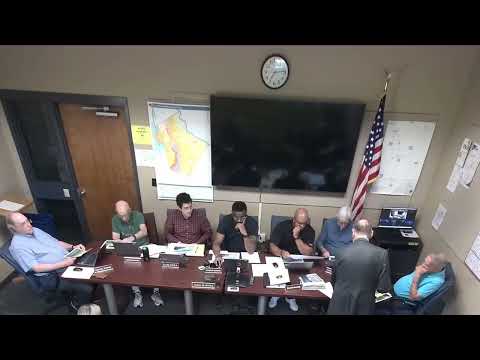
Brookfield zoning board hears appeal by homeowner John O'Hara over fence sight-line order
Summary
Homeowner John O'Hara appealed a April cease-and-desist alleging his fence replacement is a longstanding, nonconforming structure; neighbors and town staff disputed whether the fence now blocks required sight lines, and the board closed the public hearing to deliberate.
John O'Hara and his attorney asked the Brookfield Zoning Board of Appeals to vacate a cease-and-desist order stemming from a fence replacement at 18 West Wiscayneer Road. Attorney Peter Olsen opened the applicant's presentation by saying the order was procedurally defective — it named the wrong property — and argued that state statute 8-13a makes structures in place more than three years nonconforming and therefore replaceable in the same footprint. "My name is Peter Olsen. I'm an attorney in an office in Bethel at 275 Greenwood Avenue," Olsen said while explaining the legal basis for the appeal.
Neighbors and local residents contested the factual claim that the fence does not obstruct sight lines. Neighbor Jason Schoeller, who said he lives at 5 Norris Lane, presented private survey measurements and cited an industry practice used by the Connecticut Center for Assessment (CCA) and DOT methods. Schoeller told the board that the current measured sight distance at the critical point was "58 feet," which he contrasted with Brookfield guidance of roughly 300 feet for 25 mph conditions and said posed a safety concern for school buses and older residents.
Olsen responded that the highway design manual the neighbors cited applies primarily to state highways and construction projects, not to preexisting local conditions, and that small differences in the survey stake location could put the reinstated fence back on the prior footprint. He asked the board to "take a reasonable interpretation of what the word sight line means" and to consider that the fence location had existed for roughly 25 years in one form or another.
Town staff input was mixed: the land use director told the board he and zoning staff had visited the site and recommended, for procedural clarity, reissuing the cease-and-desist with the correct address if necessary, but said that with the panels removed the current condition was not treated as a continuing violation. He told the board he participated in measurement visits with the zoning officer and a town engineer and acknowledged differing technical opinions on measurement methodology.
The board closed the public portion of the hearing and moved to deliberation among seated members. Chair Douglas Cummins reminded members that any action would require affirmative votes and that the board's role is to decide whether the CEO's cease-and-desist complied with applicable zoning regulations. No formal vote was recorded in the public portion of the transcript.
Next steps: the board moved into private deliberations; the transcript ends before a decision was announced.