Get Full Government Meeting Transcripts, Videos, & Alerts Forever!
Get email alerts on the Land Use topic
No spam. Unsubscribe anytime.
Council continues Bloomshine Village rezoning after neighborhood objections; staff and applicant to explore alternatives
Summary
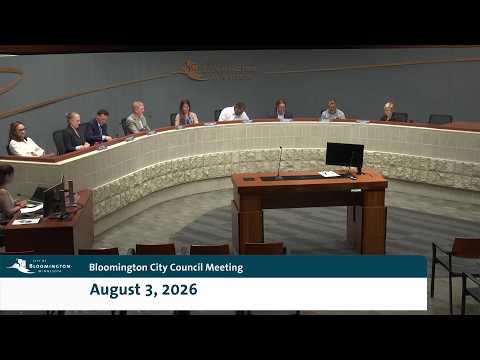
After more than a dozen residents raised concerns about height, density, traffic and notice, the council voted 4–2 to continue the Bloomshine Village rezoning and site‑plan request to Aug. 31 so staff and the applicant can explore missing‑middle alternatives and additional outreach.
Council continued a contested rezoning and site‑plan application for six lots in East Bloomington that would be replatted into 33 townhome units.
Planning staff described the proposal — rezoning six R‑1 lots to R‑3 to allow seven three‑story townhome buildings (4–5 units each), three phases, private driveway, required guest parking and three affordable units at 60% AMI. The applicant and architect said homes on the parcels were in poor condition and that medium‑density development was consistent with the city’s 2040 comprehensive plan guidance.
Neighbors testified that the proposed three‑story buildings (41 feet) and 33‑unit density are inconsistent with the single‑family context, would increase impervious surface and traffic near school bus stops, and they questioned whether the project matches the missing‑middle goals (smaller, accessible units). Several commenters said they received limited or confusing notice during the project’s early planning steps.
Several council members expressed concern about community notice, placement of medium‑density housing mid‑block, and potential alternatives that could achieve additional housing without rezoning. The city attorney and planning manager advised council that rezoning is a legislative action and that if council chooses to deny, it must record clear reasons. Council voted to continue the item to Aug. 31 and asked staff and the applicant to meet and consider whether missing‑middle R‑1 options or other designs might avoid rezoning and better respond to neighbors’ concerns. The motion to continue carried 4–2.
Why it matters: the continuation gives applicants time to work with planning staff and the community to explore less‑disruptive designs or outreach options; rezoning would have immediate land‑use implications and a failure vote could prompt legal challenge.
Next step: applicant and planning staff to meet and the item will return to council Aug. 31 for action or further continuance.