Get Full Government Meeting Transcripts, Videos, & Alerts Forever!
Get email alerts on the Public Comment topic
No spam. Unsubscribe anytime.
Residents sharply divided as council hears hours of public comment on 9 Mile Creek restoration
Summary
Roughly 30 public commenters told council Aug. 3 the 9 Mile Creek restoration is either necessary ecological renewal or an excessive “clear‑cut” that will remove mature canopy; speakers raised maintenance, transparency, and ballot language concerns while ecologists emphasized invasive‑species removal and long‑term benefits.
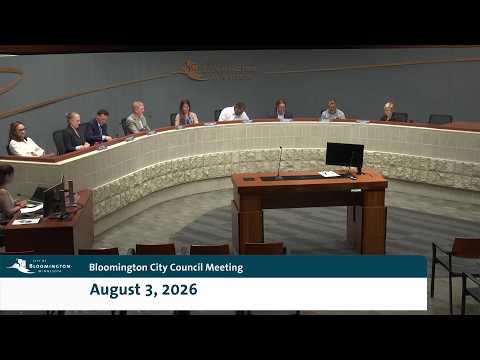
A packed Bloomington chamber heard more than two hours of public comment Aug. 3 on the 9 Mile Creek Corridor renewal and Lower Valley management plan. Speakers were sharply divided: many conservation professionals and volunteers urged council to move forward with the restoration to remove invasive species and reestablish oak‑savanna habitat, while many nearby residents urged pauses, more outreach and limits on canopy removal.
Public commenters in favor included ecologists and volunteer stewards who emphasized that buckthorn and other invasives have choked native regeneration and that restoration will improve biodiversity. Ben Bullard, introducing himself as an ecologist and board member of a prairie enthusiast chapter, said the work "is worth it" and offered to host site tours (Ben Bullard, public comment).
Several residents said they felt blindsided by the scale of canopy change and questioned whether the voter‑approved renewal had been represented as an oak‑savanna conversion. Connie Anderson said she supports removing invasives but opposed a proposal that would "remove hundreds of mature non oak trees and fundamentally transform one of the park’s most treasured features." (Connie Anderson, public comment).
Speakers repeatedly raised maintenance questions. One commenter noted that oak‑savanna systems require long‑term stewardship (burning, mowing and invasive control) and asked who will maintain the sites beyond the five‑year contractor establishment period. City staff responded that the long‑term approach will mix city staff, contracted services and volunteers, and projected additional seasonal staff and estimated annual maintenance costs.
Council members acknowledged the divided public reaction and pressed staff on clear definitions ("clear cut" vs. selective thinning), percent‑removal ranges and how the RFP reflected earlier outreach. Derek (SEH) said the true clear‑cut area tied to remeander and construction footprints was on the order of five to six acres and that other removals are thinning rather than wholesale clear‑cutting.
Why it matters: the comment period exposed a persistent gap between some residents’ expectations and the technical definitions and goals put forward by staff and consultants. Council members urged better communications while some members emphasized the ecological case for moving forward.
Next steps: Council approved the EAW resolution and the contracts; staff will continue to post clarifying material and ramp up outreach and stewardship planning as work proceeds.