Get Full Government Meeting Transcripts, Videos, & Alerts Forever!
Get email alerts on the Environmental Review topic
No spam. Unsubscribe anytime.
Bloomington council denies petition to reopen 9 Mile Creek environmental review, reaffirms 2025 EAW
Summary
After hearing from city staff and SEH consultants, Bloomington City Council voted 5–1 to deny a petition asking for a new Environmental Assessment Worksheet (EAW) for the 9 Mile Creek Corridor renewal project and reaffirmed the 2025 EAW’s sufficiency. Councilmembers discussed public‑notice procedures and areas for additional outreach.
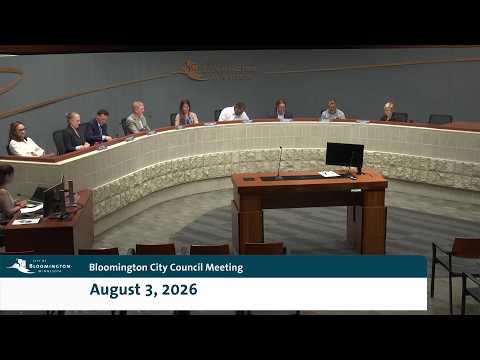
Bloomington’s City Council on Aug. 3 voted to deny a petition seeking a new Environmental Assessment Worksheet for the 9 Mile Creek Corridor renewal project, reaffirming the 2025 EAW and the city’s earlier negative declaration on the need for a full Environmental Impact Statement.
Mayor Tim Bussey introduced a late-filed resolution and called city and consultant staff forward to explain the timeline. Derek, a consultant from Short Elliot Hendrickson (SEH), told the council the original EAW had gone through a 30‑day review and received agency comments that were addressed, and that the council’s earlier negative declaration allowed project permitting to move forward. Derek said the petition raised topics that had been discussed in the original EAW but that some petitioners asked for more detail (for example, quantities of herbicide). He summarized the administrative constraint that follows a petition completeness determination by the Environmental Quality Board: "—it does have a 15 day decision turnaround that—within 15 days, the RGU is expected to make a decision on that petition, which does land us here tonight." (Derek, SEH)
Several council members pressed staff on whether petition materials introduced any new, material facts that would change the EAW’s outcome. Derek responded that, while petitioners sought greater specificity on some subjects, "there is nothing that I would say is a complete omission or something that we would significantly look at as something we would need to revise and put out again for public review." (Derek, SEH)
Council member Robertson moved to adopt the resolution reaffirming the EAW’s sufficiency; the motion was seconded by Council member D'Alessandro and carried 5–1, with Council member Rivas voting in opposition. The council’s action affirms that the city will not send the project to an EIS at this time.
Why it matters: denying the petition preserves the project schedule by allowing permitting and contract awards to proceed while staff addresses technical questions identified by petitioners and commenters. Council members said they would continue to work on public outreach and transparency about refinements to the project.
Next steps: staff and consultants said they will continue to respond to detailed technical questions raised by petitioners and to document those responses in the project record.