Get Full Government Meeting Transcripts, Videos, & Alerts Forever!
Get email alerts on the Zoning Use Variance topic
No spam. Unsubscribe anytime.
Zoning board finds use variance required for 474 Morris Avenue, deems planning application incomplete
Summary
The Summit Zoning Board of Adjustment ruled Aug. 3 that a use (D) variance is required for 474 Morris Avenue's proposed residential units above ground-floor parking and affirmed a prior completeness determination, sending the project back to the applicant for a new zoning application if it wishes to pursue relief.
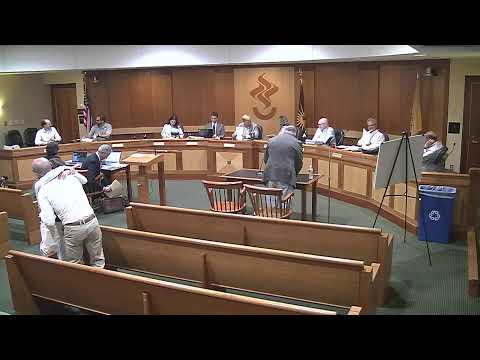
The City of Summit Zoning Board of Adjustment on Aug. 3 affirmed the city's zoning officer and determined that the proposed project at 474 Morris Avenue requires a use (D) variance before the planning board may consider site-plan approvals. The finding came after testimony from the applicant's counsel and planner and from the city's zoning officer and board-hired planner.
"My conclusion is that the project does comply with the clear and plain language of the ordinance," said John McDonough, the applicant's planner, arguing the B zone's permitted-use line "residential uses above the ground floor" covered the proposal. The applicant's attorney, Steven Melinek, asked the board to construe the plain text and allow the planning-board filing to proceed if the checklist is met.
The zoning officer, Roger Dornbever, testified he had concluded the submission did not meet the B zone's stated purpose because the ground floor as proposed (parking and accessory areas) would not provide the frequent public access the purpose language envisions. Dornbever said his office relied on that context when issuing the completeness determination that the applicant appealed.
Board members debated whether to read the six words of the permitted-use clause in isolation or to give weight to the purpose and other related code sections. Several members said the town's broader purpose language and existing practice supported a conclusion that ground-floor commercial activity is intended for the B zone in at least some locations.
After deliberation the board voted to "affirm that a D variance is required" and then voted to "affirm the determination of the application's incompleteness." Andy Ball, board counsel, explained that if the board finds a D variance is required the planning board would not have jurisdiction to hear the application until the applicant submits a zoning application for the use variance.
The ruling does not grant or deny any use variance; it resolves only (1) whether a D variance is required and (2) whether the prior completeness determination was correct. The applicant may choose to submit a zoning-board application seeking the use variance or revise its plans.