Get Full Government Meeting Transcripts, Videos, & Alerts Forever!
Get email alerts on the Coastal Resilience topic
No spam. Unsubscribe anytime.
Commission begins review of Cape Cod Commission coastal‑resilience wetland rules; sea‑level projections and definitions draw debate
Summary
The Harvest Conservation Commission reviewed draft sections 7–8 of the Cape Cod Commission's coastal resilience/wetland regulations. Discussion centered on whether to adopt state building‑code minimums or to plan for sea‑level rise (through 2050), definitions of 'structure', preservation vs. restoration of native soils, and phasing rules to prevent regulatory evasion.
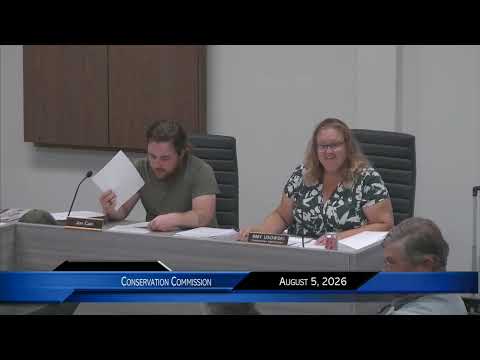
Commissioners spent an extended portion of the Aug. 5 meeting reviewing draft coastal‑resilience flood‑zone standards supplied by the Cape Cod Commission. Staff said the draft included both user‑friendly clarifications and substantive performance standards; the commission discussed whether to key standards to existing flood zones or to include projections for sea‑level rise, and debated an appropriate planning horizon.
One commissioner read NOAA figures into the record, noting that global mean sea level has risen 8 to 9 inches since 1880 and that global mean sea level in 2023 was roughly 3.99 inches above 1993 levels; staff and commissioners agreed that projections become more uncertain past mid‑century and suggested focusing discussion on a 2050 planning horizon as a conservative baseline. Members debated definitional issues — for example whether decks, patios, fences and ground‑level patios should be counted as 'structures' — and whether the town should adopt state building‑code elevations now or explicitly require higher freeboard locally in the future.
Commissioners and staff supported several specific performance approaches in principle: require projects to avoid increasing flood elevation or velocity, prevent channelization or impediments to return flows, preserve existing native soils and vegetation to the greatest extent practicable (with options to restore after storm damage), prohibit phasing or segmentation to evade standards, and build monitoring/renourishment conditions into approvals for shoreline projects. Staff said it will gather county‑specific data from the county coastal processes specialist and circulate links to supporting documents ahead of the next meeting.