Get Full Government Meeting Transcripts, Videos, & Alerts Forever!
Get email alerts on the Land Use topic
No spam. Unsubscribe anytime.
Zoning subcommittee refers text changes to comply with Connecticut’s Public Act 25‑1
Summary
The New Britain Zoning Subcommittee voted to refer a zoning text amendment to the full council that reclassifies residential uses to implement Public Act 25‑1, requiring towns to allow "transit‑community middle housing" (2–9 units) and to permit mixed‑use development by summary review in commercial/mixed‑use districts.
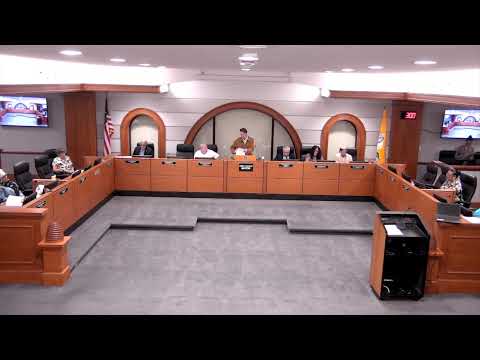
The New Britain Zoning Subcommittee voted to refer item 37,177 — a text amendment to bring local zoning into compliance with Public Act 25‑1 — to the full City Council with a neutral recommendation.
Justin Dorsey, director of planning and development, and Jeff Cormier, city planner, told the subcommittee the state law requires towns to permit a new classification called “transit‑community middle housing,” defined in the statute as housing of between two and nine units. "Transit community middle housing ... is any type of housing between 2 and 9 units," Cormier said during the presentation. He said the change mostly reclassifies existing local housing categories so that permitted‑use lists align with the state definitions while dimensional standards (lot area, setbacks, density) remain enforceable.
Supporters argued the revision adapts existing rules to state law without wholesale changes to neighborhood footprints. Cormier said many districts in New Britain already permit two‑family, three‑family and multifamily housing, and that the amendment wraps those uses into the new state categories. "It's really an effort in reclassifying and working within our existing framework," he said.
The City Plan Commission recommended approval, noting the amendment establishes statutory terms and makes the necessary ordinance revisions. Alderman Francisco Santiago moved to refer the item to the council with a neutral recommendation; the motion carried.
What happens next: the item will be placed on the City Council agenda for a full vote and any additional amendments. Staff emphasized that even where uses become permitted, development is still limited by dimensional and building‑code requirements, which can restrict the practical number of units on a given lot.