Get Full Government Meeting Transcripts, Videos, & Alerts Forever!
Get email alerts on the Public Safety topic
No spam. Unsubscribe anytime.
County 9‑1‑1 director outlines AI tools, staffing and high call volumes
Summary
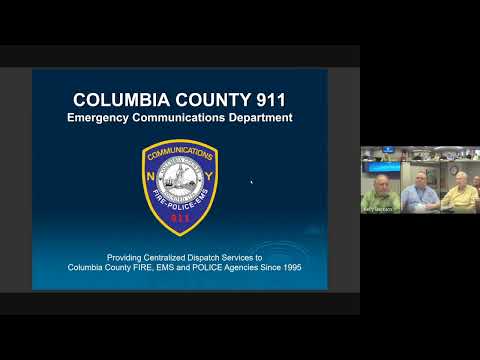
Kevin Johnson, director of Columbia County 9‑1‑1, told the Health & Human Services Committee that the center answered more than 42,000 calls last year, is exceeding state answer‑time standards, and has adopted AI and location tools such as RapidSOS and PrepareLive to improve response and translation.
Kevin Johnson, director of Columbia County 9‑1‑1, told the Health & Human Services Committee on Feb. 17 that the county’s emergency communications center answered more than 42,000 calls in 2024 and meets state standards for speed of answer.
"We answered over 42,000 calls last year," Johnson said, adding that the average answer time is about "6.13 seconds" and that "96% of the 9 1 calls are answered in less than 10 seconds," well ahead of the state standard. He described the center’s personnel and training requirements — typing tests, background investigations, psychological exams, and continuing education — and said typical dispatcher training is eight months.
Johnson also detailed new technology the center has adopted to improve operator situational awareness and caller location. "We use a tool called RapidSOS," he said, and described PrepareLive two‑way texting, real‑time transcription and translation, and an AI keyword‑detection system that flags possible overdoses for dispatchers. He described a recent call in which AI‑generated summaries helped staff identify multiple weapons and a high‑risk subject more quickly.
The director noted recent grant support for equipment upgrades and broadband redundancy; he said a $1,500,000 award helped upgrade call‑handling systems. Committee members asked about staffing minimums (the state minimum is two people) and the difficulty of recruiting for 12‑hour shifts. Johnson said the center currently has staff in training and emphasized the need for ongoing recruitment and training to maintain response standards.
Why it matters: the presentation explained how investments in technology and training are intended to sustain performance during higher demand — a concern as emergency services adapt to evolving call volumes and staffing pressures. The committee did not take formal action on the presentation but praised the 9‑1‑1 team's performance.