Get Full Government Meeting Transcripts, Videos, & Alerts Forever!
Get email alerts on the Transportation Policy topic
No spam. Unsubscribe anytime.
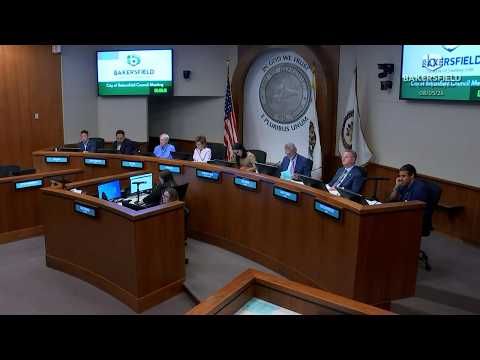
Council adopts traffic-safety policy prioritizing NACTO street design; vote splits council
Summary
The city adopted a resolution prioritizing the NACTO Urban Street Design Guide for city road rehabilitation and development, aiming to encourage narrower lanes, buffered bike lanes and speed-calming features; the vote carried with several 'no' votes from members concerned about enforcement and local preferences.
The Bakersfield City Council voted to adopt a traffic-safety resolution that directs staff to prioritize elements of the NACTO Urban Street Design Guide when feasible for rehabilitation and new construction. The resolution formalizes preferred design choices — narrower travel lanes (10–11 feet), buffered bike lanes, and traffic-calming tools such as medians, curb extensions and speed humps — while preserving existing code and engineering manuals as applicable.
Public comment was split. Residents and business owners including attorney Craig Braun said the resolution risks overreach and could mandate design choices that do not fit Bakersfield’s existing arterial needs, warning of narrower lanes and mixed-use consequences. “This is not a bicycle safety resolution…This is a wholehearted, full throated planning that tells the planning department how they're going to design our cities,” Braun said. Supporters, including members of local cycling advocates and Councilmember Smith, cited local traffic fatalities and data showing narrower lanes slow vehicles and reduce crash severity. “The studies show that narrow lanes are safer,” Councilmember Smith said during debate.
Staff emphasized the policy is a tool kit and that exceptions and design exceptions remain available where operations, freight corridors or geometric constraints require wider lanes. The resolution passed with several members recording no votes; staff said the policy provides a clearer framework for future design decisions and project justifications.