Get Full Government Meeting Transcripts, Videos, & Alerts Forever!
Get email alerts on the Animal Ordinance topic
No spam. Unsubscribe anytime.
Committee hears major rewrite of South Bend animal-care rules, SBARK staff say changes align policy with practice
Summary
Assistant city attorney and SBARK staff presented a comprehensive rewrite of Chapter 5 to clarify care standards, create species-specific permitting and replace a lifetime "habitual offender" designation with a compliance-focused regulated-animal possession permit; staff said the changes prioritize education and due process before enforcement.
Assistant City Attorney Jenna Thoreau presented a comprehensive reorganization of Chapter 5 of the South Bend Municipal Code, explaining that the proposed ordinance clarifies definitions, groups requirements into articles and expands permitting and enforcement tools for the South Bend Animal Resource Center (SBARK).
"We restructured the ordinance into articles that flow better and grouped related requirements together to improve usability for residents, staff and council," Thoreau said in the presentation. She listed new species-specific provisions (horses, honeybees, pigeons, urban chickens), expanded minimum care standards (shelter, adequate space, veterinary care and protections from extreme weather) and standardized permit language for breeders, kennels and animal events.
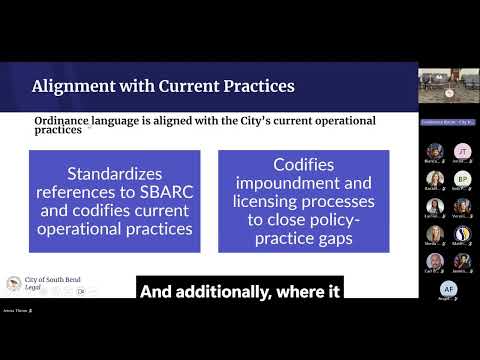
Britney Gendron, SBARK director, told the committee the shelter was deeply involved in drafting and that aligning the ordinance with current operational practice would make field enforcement more consistent. "This ordinance, I think, takes a much more proactive approach to animal welfare and public safety," Gendron said, adding that staff will use education and resource referrals before moving to citations.
A central enforcement change would replace the existing "habitual animal offender" designation with a "regulated animal possession permit," a graduated compliance tool that can carry individualized conditions such as limits on numbers, required training or inspections. Thoreau said the new procedure preserves due process: notice, hearings and appeal rights are clarified, and recommendations to deny a regulated-animal possession permit will be presented to the Animal Welfare Commission rather than decided by a hearing officer.
Council members sought practical detail: President Lee asked about the minimum age for transfers of puppies and kittens; staff confirmed a 10-week minimum for transfer of ownership. Committee members and SBARK staff also discussed enforcement capacity; Gendron said many enforcement activities are already performed by SBARK and the clearer language will help prioritize education and compliance first.
The committee did not vote on final adoption; staff said they plan to continue discussion at a later meeting with second and third readings scheduled, and to circulate a revised substitute reflecting prior commission feedback. The committee adjourned the animal-item portion of the meeting for additional consideration.