Get Full Government Meeting Transcripts, Videos, & Alerts Forever!
Get email alerts on the Sea Turtle Conservation topic
No spam. Unsubscribe anytime.
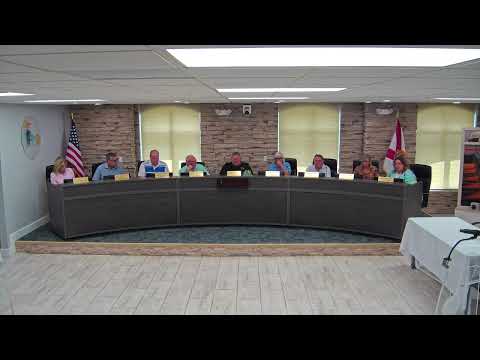
Council debates sea turtle lighting rules and their application after storm rebuilding
Summary
Staff and council held a long discussion of the town's sea turtle conservation and lighting codes. Staff said code is based on the state model and FWC guidance; council members pressed staff about subjectivity in application, construction delays tied to lighting reviews, the role of interior lights and TV screens, and potential operational-plan exemptions for businesses.
Fort Myers Beach staff and council spent an extended period reviewing the town's sea turtle conservation code and lighting standards, focusing on how the rules are applied to new construction and commercial operations after hurricane rebuilding. Chad (staff) said the sea turtle code mirrors the state model ordinance and FWC guidance and explained that the town reviews lighting for any structure waterward of the 1991 CCCL and for all commercial and multifamily properties island-wide.
"Our code is about telling people the proper lights so that they can have those lights on all night for safety ... and not impact the sea turtles," Chad said, summarizing the policy goals and noting that FWC guidance favors low-mounted fixtures, long wavelengths (amber), shielded and downward-directed lights. He also described enforcement work: the town has issued numerous warning letters and is tracking lighting cases; Chad reported 15 disorientation incidents out of 32 nests so far this season.
Several council members said the ordinance's language is subjective in places and that inconsistent application was delaying permits and closings. Council asked whether the code could allow a dual lighting scheme (amber during turtle season, white at other times) controlled by technology or operational plans; Chad said operational plans have been approved in a few cases (Margaritaville, some 7‑11 sites) but warned that human error and enforcement resources pose challenges. The council and staff discussed practical fixes including clearer definitions of 'exterior lighting,' explicit rules for TVs and garage-style doors, and expanding staffing for environmental review and enforcement.
Chad recommended options such as operational plans with time limits and shrouds for screens, clearer definition of exterior lighting in the code, and additional staff to support reviews. Council members asked staff to return with possible code clarifications, operational-plan templates, and a staffing recommendation to reduce permit delays.