Get Full Government Meeting Transcripts, Videos, & Alerts Forever!
Get email alerts on the Animal Control topic
No spam. Unsubscribe anytime.
After strong public pleas, Putnam commission backs staff to draft enforceable animal-control ordinance
Summary
Following a July 14 interagency review and extensive public comment, the board directed staff to move forward on revising the county animal-control ordinance to allow criminal citations for selected infractions and to return with fee schedules, working-group findings and draft language for further review.
Putnam County commissioners on July 28 voted to direct staff to continue drafting amendments to the county's animal-control ordinance that would allow certain infractions to be elevated to citable offenses enforceable by law-enforcement partners.
Staff told the board that an interagency meeting on July 14 — which included animal-control personnel, county administration, the sheriff’s office and the state attorney’s office — concluded the current code did not provide a firm legal vehicle for punitive citations. To enable police or certified animal-control officers to cite certain offenses, staff said the ordinance language and fee schedule must be revised so those infractions could be charged as criminalized infractions (potentially second-degree misdemeanors).
Commissioner Newbold framed the effort as a multi-part process requiring coordination with the clerk, judges and public defenders to ensure the judicial pipeline could absorb new dockets. He asked for board direction to continue the work; the board moved and approved that direction.
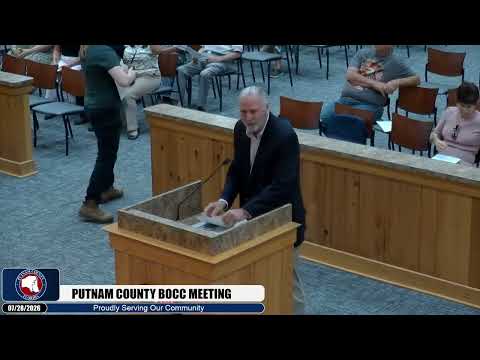
Public comment was extensive and emotionally charged. Diane Kelly and other residents said Putnam County historically failed to enforce animal-welfare laws and pleaded for immediate change. Diane Kelly said the county had been "1 of the only counties" in Florida that did not enforce animal-welfare laws as she understands it; she urged the board to act. Yvette Reyes and other commenters advocated for mandatory spay/neuter and raised concerns about cost and county responsibility for a spay/neuter trailer.
Staff said they would convene working groups (agency partners and an advisory board), collect cost estimates and present proposed ordinance language, fee schedules and operational details at a future meeting or workshop. The board also indicated willingness to hold evening workshops to broaden public participation.
Next steps: staff to coordinate with judicial partners and the animal-services advisory board, produce draft ordinance language and a recommended fee schedule, and present those documents to the commission for review.