Get Full Government Meeting Transcripts, Videos, & Alerts Forever!
Get email alerts on the Offshore Wind topic
No spam. Unsubscribe anytime.
Commission split over naming of heavy-lift terminal as 'offshore wind' in Humboldt Bay plan
Summary
At a continued Humboldt County Planning Commission workshop, commissioners debated whether to explicitly name offshore wind in port-overlay language or to keep references broad to preserve future flexibility. Staff will add preamble language tying wind to greenhouse-gas goals and refer to a generic 'heavy lift marine terminal' in provisions, after a 4–3 straw poll.
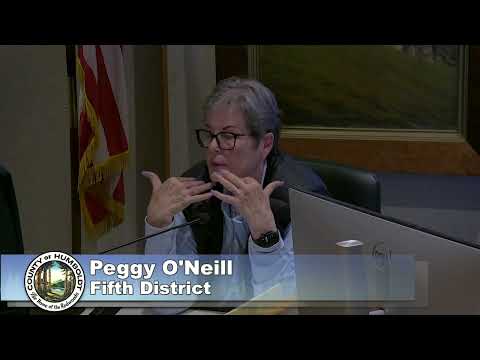
The Humboldt County Planning Commission spent much of its workshop continuation wrestling with whether the Humboldt Bay Area Plan should explicitly name offshore wind as the purpose for a proposed port overlay and heavy-lift marine terminal, or use broader language to preserve flexibility for future industries.
Commissioners who favored keeping wind in the plan said naming offshore wind signals county support for state renewable-energy goals and helps align planning with greenhouse-gas mitigation. One commissioner argued for tying the preamble to the regional climate action plan. Commissioners on the other side warned that naming wind in detailed provisions could lock the county into a future it may not be able to control, and urged a broader term such as "sustainable energy generation" or simply "heavy lift marine terminal." The chair conducted a straw poll that showed four commissioners in favor of retaining wind references in the preamble with broader wording in the detailed provisions and three opposed.
Staff summarized a compromise: add language to the plan's preamble explaining "the importance of offshore winds to reducing greenhouse gas emissions" and noting that an early Bay project could be a heavy-lift terminal to support offshore wind, while changing the operative provisions to refer to a "heavy lift marine terminal" rather than repeatedly calling out wind. Director Ford synthesized the direction: "we're really going to work on... add to the existing language there, to talk about, the importance of offshore winds to reducing greenhouse gas emissions to our overall strategy of addressing climate change," and then use the generic terminal language in the provisions.
The commission directed staff to return revised text incorporating that preamble language and to sanitize repeated wind references in the subsections; the matter will be revisited at the continued workshop and in subsequent public hearings.