Get Full Government Meeting Transcripts, Videos, & Alerts Forever!
Get email alerts on the Program Funding topic
No spam. Unsubscribe anytime.
Legislators press whether producers on contingencies received Clean Water funds
Summary
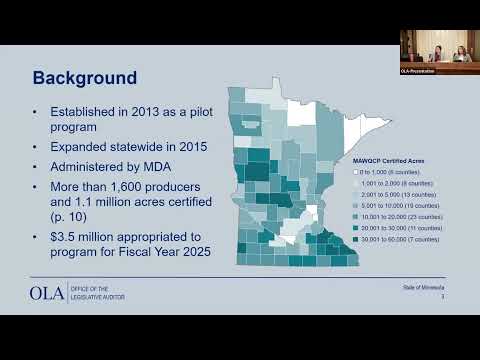
Commissioners asked if producers certified with contingencies received program payments; OLA said the grant structure allows producers who began the application process to receive funds, and MDA said reimbursements require implementation and are capped.
Several legislators asked whether producers who were certified with contingencies nevertheless received Clean Water Fund payments.
"Can you just tell us, generally, of the appropriation, what are the expenses with that? You know, is it all going towards producers, or is it a certain fraction...?" Representative (speaker) asked. Caitlin Zenoni Wells said the report includes a high-level breakdown and that more than one-third of appropriations went to soil and water conservation districts and staff who deliver certification services. She said some funds go directly to producers for implementing practices but that the grant structure allows producers who are in the process of certification to receive funds.
Representative Lee asked specifically whether producers on contingencies had received public dollars. Wells replied, "We did look to a limited extent at that...the way that MDA's grant is structured allows producers who are in the process of being certified and those who are certified to receive funds. So that does open up to literally any agricultural producer in Minnesota who has expressed an interest and begun the application process." Commissioner Tom Peterson added that many program payments are reimbursements and that reimbursements are restricted to a maximum of $5,000 and capped at 75% of total expenses; he said producers receiving payments must document practices and provide receipts.