Get Full Government Meeting Transcripts, Videos, & Alerts Forever!
Get email alerts on the Zoning Text Amendment topic
No spam. Unsubscribe anytime.
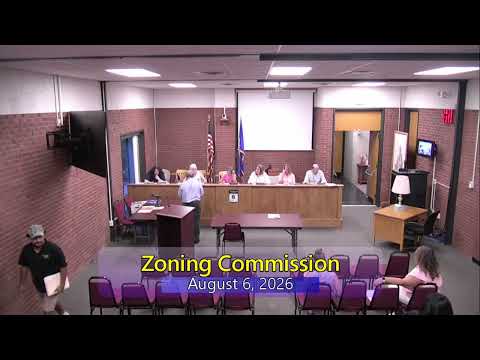
East Lyme commission moves proposed data-center ban to public hearing
Summary
A zoning subcommittee recommended defining and prohibiting data centers; the commission accepted the definition and voted 6–0–0 to send a text amendment to public hearing and add data centers to prohibited uses (section 20.2).
The East Lyme Zoning Commission voted to send a proposed definition and prohibition of data centers to public hearing on Aug. 6 after a subcommittee presentation and discussion. The motion to accept the definition and place the amendment on a public hearing schedule passed by voice vote, 6–0–0.
A subcommittee member read a proposed definition into the record: “A data center is a facility primarily designed and used to house a group of network computer servers in one physical location ... to centralize the storage, management, and dissemination of data and information,” language the group asked the commission to adopt as the basis for a text amendment that would add data centers to the town’s list of prohibited uses (section 20.2). The subcommittee said the town attorney had also proposed a moratorium as an alternative to a flat prohibition to allow time for study.
Commissioners discussed local concerns including energy consumption, potential pollution and runoff, and the emergence of smaller-scale or “mini” data centers that could fit on small lots. One commissioner noted the subcommittee had found a range in facility sizes, saying they “can make them on 10 acres” but that data centers “can be as little as an acre to an acre and 0.5,” underscoring the subcommittee’s concern about small installations.
By moving the text amendment to public hearing the commission opens a formal public-review step where residents, applicants and staff can submit evidence and testimony before the commission decides whether to adopt a permanent prohibition or adopt other limits.