Get Full Government Meeting Transcripts, Videos, & Alerts Forever!
Get email alerts on the Social Security Solvency topic
No spam. Unsubscribe anytime.
Committee member urges bipartisan fix to avert Social Security insolvency
Summary
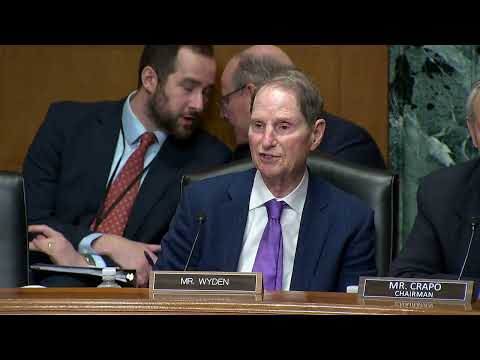
A committee member opening a Senate Committee on Finance hearing warned the Social Security trust fund could be depleted within the next presidential term, cited the Social Security Actuary Office and recent tax legislation, and urged a public bipartisan debate rather than an outside commission.
A committee member opened a Senate Committee on Finance hearing by warning the Social Security trust fund faces near-term insolvency and urging lawmakers to address the problem publicly and across party lines. "The trust fund is gonna be depleted before the end of the next presidential administration," he said, citing urgency for action.
The lawmaker said the consequences would be severe for beneficiaries and cited data he attributed to the Social Security Actuary Office, adding that "1 in 4 seniors rely on their earned Social Security benefits for virtually all of their income." He also linked last year's tax legislation to an acceleration of the solvency problem, saying that bill "plundered Social Security by a $168,000,000,000." The speaker said Democrats on the committee have offered a plan that could secure benefits "indefinitely into the future without a single dime of cuts to a current or future retiree," and argued solutions could be funded by updating payroll and income taxes on the very wealthy: "ask billionaires to pay their fair share through the payroll and income taxes."
He framed his objection to other proposals as a matter of process as well as substance. The committee member criticized ideas for creating an external, unaccountable commission to make benefit changes, saying such an approach would short-circuit public debate and could result in cuts to benefits that many retirees depend on. He closed by thanking witnesses and urging the committee to conduct its debate in public view.
The remarks constituted the opening statement for the committee's examination of Social Security's finances; no formal votes or motions were offered in the segments provided.