Get Full Government Meeting Transcripts, Videos, & Alerts Forever!
Get email alerts on the Defense Budget topic
No spam. Unsubscribe anytime.
Senate panel grills Pentagon on supplemental that includes munitions and $1.5 trillion plan
Summary
Defense officials told the Senate Appropriations Committee the president's supplemental is intended to refill munitions, sustain pay and readiness, and accelerate capabilities; senators pressed on why the emergency request bundles long-term items and asked about $75 billion in unobligated prior funds.
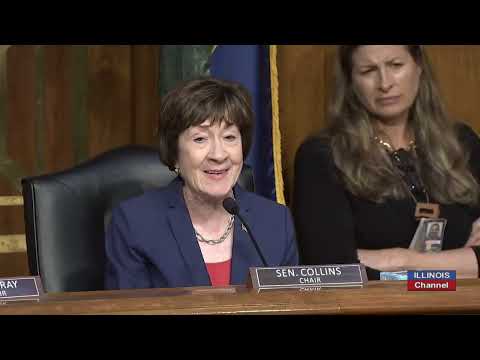
Chairwoman Collins convened the Senate Appropriations Committee hearing to examine the administration's supplemental funding request for defense and domestic priorities. Secretary Pete Hegseth told senators the supplemental is "an urgent, necessary injection of resources" to address immediate readiness shortfalls and accelerate capability production, and that it sits inside a broader $1.5 trillion defense budget proposal.
Hegseth said the supplemental requests $21 billion for readiness and $46 billion for capability acceleration to expand munitions production and invest in technologies including hypersonics, counter-drone systems, and resilient satellite networks. "Without these funds, we face critical shortfalls that threaten our ability to simply pay our service members, rapidly replenish equipment and munitions, and sustain vital operations," he said.
Democratic members, led by Vice Chair Murray and Senator Durbin, pressed for detail about how much of the supplemental directly funds operations in Iran versus longer-term procurement. Murray said Democrats "cannot and will not support rubber stamping" a request that, she argued, mixes urgent war costs with unrelated priorities. Durbin asked Hegseth to reconcile the supplemental total with an estimate he had provided earlier and highlighted roughly $75 billion that DOD still has unobligated from prior reconciliation funding.
General Dan Kane, chairman of the Joint Chiefs, told the committee the supplemental would be used "to buy down risk" and to maintain deterrence while the U.S. scales production of critical items. "We are the strongest military in the world," he said, but added the services need predictable, consistent funding to sustain operations across multiple theaters.
Senators also questioned whether the supplemental properly follows the appropriations process. Hegseth defended the request as necessary to address immediate shortfalls and described plans to use targeted legislative authorities (transfer authority and multiyear procurement) to speed delivery. The witnesses pledged to provide follow-up details on specific procurement timelines and the planned use of unobligated balances.