Get Full Government Meeting Transcripts, Videos, & Alerts Forever!
Get email alerts on the Special Education topic
No spam. Unsubscribe anytime.
Board hears sharp rise in special-education enrollment and staffing needs; district outlines staffing changes
Summary
Human-resources and superintendent reports cite substantial increases in students requiring special-education services and corresponding staffing changes — district officials say increases are driving higher staffing needs even as total enrollment trends down.
District human-resources and administrative staff told the board that student need in certain special-education categories has risen substantially in recent years and is changing staffing and budget pressures.
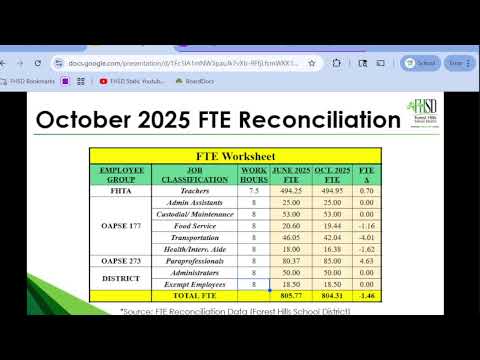
Human-resources representative Mr. Fellows reported hiring activity and retention metrics: "Since that time, we've hired 34 new certified employees, 6 new administrative employees, and 34 new classified employees," he said, and then described how many of those certified hires are intervention specialists and behavior specialists. Fellows said retention rates were "about 93%" for certified staff and roughly "88%" for administrators and classified staff, figures he characterized as "industry standard."
Fellows and other staff highlighted steep increases in specific special-education categories: a 77% rise in emotional-disturbance classifications since 2016, 61% for autism, and about 64% for Other Health Impairment (OHI). The district reported a roughly 25% overall increase in students receiving special-education services (EMIS child count), increasing FTE demand because students with intensive needs require smaller staff-to-student ratios and more paras.
The board asked whether federal restructuring or cuts to the Office of Special Education Programs (OSEP) would affect local funds; staff said the district is on a state funding guarantee for the next two years, noted a small change in some grant-line amounts (an initial IDEA allocation cited around $1,592,000 this year versus $1,607,000 last year) and recommended continued monitoring and committee work to address long-term funding risks.