Get Full Government Meeting Transcripts, Videos, & Alerts Forever!
Get email alerts on the Camping Ordinance topic
No spam. Unsubscribe anytime.
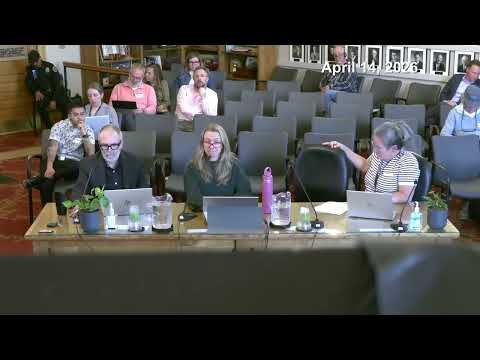
Council reviews proposal to expand camping definition to include vehicle 'living' and unattended property
Summary
City staff proposed rewriting the camping ordinance to cover sleeping in vehicles and a broader set of 'limited accommodation' activities on public property; council members and community members raised concerns about criminalizing homelessness and about enforcement, outreach, and shelter capacity.
City staff presented a comprehensive rewrite of Salt Lake City’s camping and public‑property obstruction ordinance and answered extensive council questions about enforcement, outreach and the ordinance’s likely impact on people experiencing homelessness.
Nick Tarvitt, a council deputy director, framed the proposal as an update to a decades‑old rule to reflect contemporary living arrangements: the revised definition expands "camping" beyond tents to include living accommodation behaviors on any public property and specifically adds sleeping outdoors or in a vehicle during closed hours, leaving personal property unattended, and related activities such as preparing or consuming meals. Tarvitt said the change is intended to make enforcement clearer and focus on behaviors that cause public‑space problems while aiming for "humane and compassionate enforcement." (SEG 542–581.)
Andrew (staff) and Commander Jared Gilbert of the police department described enforcement and outreach. Staff repeatedly said the ordinance is not intended to "solve homelessness" — that is a broader policy and funding issue — but that the code gap on occupied vehicles is an immediate hole the ordinance would address. Andrew said the city will continue to emphasize outreach teams and social‑worker partnerships: "This is not intended to solve homelessness." (SEG 593.) Commander Gilbert described the police response as a last resort, with social workers and outreach partners coordinating on most interactions.
Council members pressed staff on practical risks: Councilwoman Carlson said she was concerned about criminalizing poverty, asking how alternative‑response teams and social workers would be used during enforcement; staff replied that outreach continues and that the police will be trained to work with social workers. Councilmember Young pressed for performance metrics and rapid response targets; staff suggested measuring response times for occupied vehicles and changes in camping counts.
Public commenters raised neighborhood safety and notification concerns, particularly near schools, and asked how the city would reach people living in vehicles who may not be tuned into city communications. Staff said internal policy will cover notification and that targeted outreach and signage are possible. The council did not adopt the ordinance during the work session; staff indicated they will return with revised materials and possible implementation steps.