Get Full Government Meeting Transcripts, Videos, & Alerts Forever!
Get email alerts on the Social Security topic
No spam. Unsubscribe anytime.
Cassidy, Durbin push Promise Act to set up bipartisan process on Social Security
Summary
Senators Bill Cassidy and Dick Durbin urged the Senate on the floor to adopt the Promise Act to create a bipartisan, public process for considering Social Security fixes; both warned actuary projections put the trust fund at risk in roughly six years, with potentially large benefit cuts or payroll-tax increases if Congress waits.
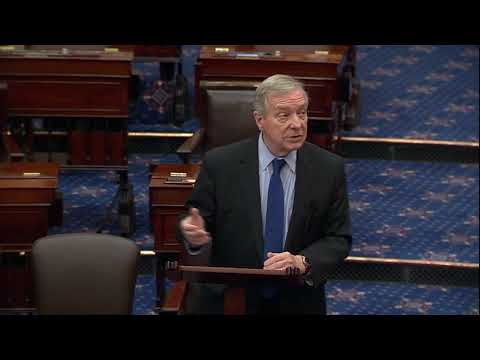
Senator Bill Cassidy and Senator Dick Durbin used floor time to press for passage of the "Promise Act," a bill their remarks described as a procedural vehicle to force public consideration and debate of options to shore up Social Security.
Cassidy opened the exchange, saying the bill would "set up a process to propose solutions" rather than prescribe a single remedy. He warned that delay would only increase the size of cuts or taxes required and said the country cannot "dodge its responsibility" to act. Cassidy cited projections that the Social Security trust fund could be insolvent in about six years and warned of either very large benefit reductions or sharp payroll-tax increases if Congress does not move.
Durbin, who praised the bipartisan effort, said about 75 million Americans rely on Social Security and that experts project the program could be unable to make full promised payments in roughly six years. He illustrated the potential effect on beneficiaries by noting that "the average social security check now is around $2,400 a month" and that a projected cut would reduce that payment by roughly $450–$500 a month for someone whose benefit is their only income.
Both senators framed the Promise Act as a way to cut through Senate procedural delay while preserving the chamber's requirement that any substantive change still meet the 60-vote threshold. Neither senator presented a specific policy change in these remarks; both emphasized the measure's procedural aim and urged colleagues to allow debate and votes on alternative plans.
No motion or vote occurred during the exchange. Cassidy and Durbin concluded by saying they would continue to push the measure and encouraged colleagues to engage in a public, bipartisan process over Social Security's future.