Get Full Government Meeting Transcripts, Videos, & Alerts Forever!
Get email alerts on the Interagency Cooperation topic
No spam. Unsubscribe anytime.
South Lake Tahoe PD outlines cross‑jurisdiction cooperation and refreshed MOU with Douglas County
Summary
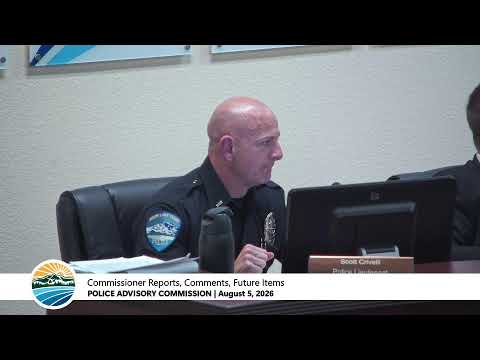
Lieutenant Scott Carvelli described how the department uses memoranda of understanding and mutual‑aid to respond across county and state lines, and explained a recent change allowing any authorized employee to request help from Douglas County to reduce response delays.
Lieutenant Scott Carvelli of the South Lake Tahoe Police Department told the Police Advisory Commission that the department regularly coordinates with neighboring agencies — El Dorado County Sheriff's Office (EDSO), California Highway Patrol (CHP) and the Douglas County Sheriff's Office (DCSO) in Nevada — to handle incidents that cross jurisdictional lines. He said the department refreshed a memorandum of understanding with DCSO in March to formalize cross‑state assistance requests and to let any "authorized employee" (rather than only supervisors) request help when officers need immediate backup.
Carvelli described that mutual aid is frequent at night and during busy events at Stateline, where resources can be stretched: "We'll ask, hey, is the sheriff's office available to go?" He said the revised MOU aims to reduce delays when an officer at the scene needs immediate assistance. Carvelli added that routine cooperation with EDSO is seamless because the agencies share county prosecutors and common operational practices.
The presentation emphasized that legal and practical limits still apply: officers have authority tied to their political subdivision and specific statutes govern when out‑of‑jurisdiction action is permitted. Commission members asked follow‑ups about complaint handling and reimbursement for large incidents; Carvelli said agencies conduct internal investigations for their own officers and that Cal OES or other state mechanisms typically provide reimbursement when events meet emergency thresholds.