Get Full Government Meeting Transcripts, Videos, & Alerts Forever!
Get email alerts on the Homeless Shelters topic
No spam. Unsubscribe anytime.
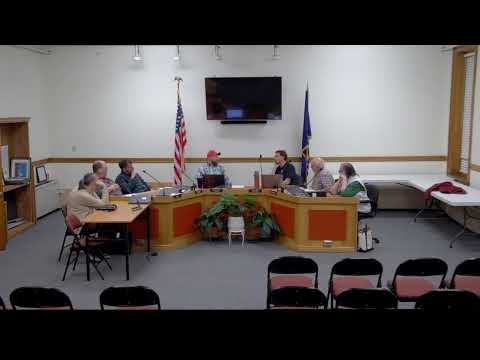
Planning Board amends homeless-shelter ordinance draft, ties enforcement to shelter availability
Summary
The Skowhegan Planning Board revised a proposed homeless shelters and public camping ordinance to make enforcement contingent on shelter availability and forwarded the amended draft to the Select Board after extended debate over definitions, setbacks and vetting requirements.
The Skowhegan Planning Board spent the bulk of its workshop reviewing a combined homeless shelters and public camping ordinance and agreed to forward a revised draft to the Select Board.
Staff and members debated several substantive elements: legal constraints from recent federal court decisions, a broad municipal-property definition that could cover parks and sidewalks, a proposed 1,000-foot separation from schools or other shelters, sanitary and safety requirements, and a contested staff- and volunteer-vetting provision. The staff speaker noted the current legal landscape: "So, 2024, I believe it's Grants Pass, Oregon or California. This has become case law," and recommended revisions to ensure the town does not attempt to criminalize sleeping in public when no shelter alternatives exist.
Board members focused on operational details. Committee member (S7) urged clear facility standards — floor plans, evacuation procedures, staffing plans and monthly pest-inspection reports — saying many of those items "make total sense" in protecting public health and safety. At the same time, several members pushed back on an early draft clause directing the Skowhegan Police Department to "conduct a review of submitted personnel information" for licensing (section 17), calling town-conducted vetting subjective and a potential liability.
The board adopted a set of amendments including insertion of language to limit enforcement to times "when shelter space is available," and signaled consensus to pass the amended ordinance to the Select Board. Chair (S3) called for the vote to forward the draft after members nodded agreement; the Chair then directed staff to transmit the revised text to the Select Board for their review.
The Planning Board kept the record open for procedural follow-up: staff will refine definitions, add variance language to permit the Planning Board to reduce separation distances where appropriate, and clarify licensing/revocation standards so that substantiated violations — not mere complaints — would be the basis for enforcement actions. The Select Board will receive the amended draft as the next formal step.