Get Full Government Meeting Transcripts, Videos, & Alerts Forever!
Get email alerts on the Surveillance Policy topic
No spam. Unsubscribe anytime.
Resident urges Rexburg to curb AI-powered license-plate readers, warns of privacy risks
Summary
Taylor Riley presented a data-rich argument urging the council to consider an ordinance and privacy policy to limit automated license-plate readers (ALPRs) and other AI surveillance systems, citing national misuse cases and offering a draft ordinance for council review.
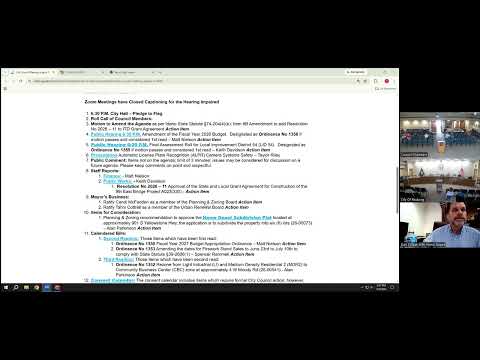
Taylor Riley told the council he was not asking them to “solve a crime” but to decide whether Rexburg residents should be part of a nationwide AI surveillance network, and urged proactive policy action. “I’m asking you to decide whether every innocent civilian in Rexburg should become part of a nationwide AI surveillance network,” Riley said, outlining how ALPR companies operate and how cloud-based platforms can make vehicle and device location data widely searchable.
Riley described national examples of mistaken or abusive uses of AI and ALPR data, including cases he said led to wrongful arrests and lengthy legal entanglements. He cited a family that received a $1.9 million settlement after a mistaken match and said that jurisdictions nationwide have rejected or deactivated similar systems. He asked the council to review a drafted ordinance that would restrict deployments and increase transparency and public input.
Mayor acknowledged the concerns and said staff would consult legal counsel to assess how Idaho law and existing agency rules interact with local ordinances and suggested the council could place Riley’s draft on a future agenda for discussion. Several council members expressed interest in seeing the ordinance language and additional material before advancing a formal policy.