Get Full Government Meeting Transcripts, Videos, & Alerts Forever!
Get email alerts on the Task Groups Creation topic
No spam. Unsubscribe anytime.
Advisory committee forms industry-backed task groups to overhaul CTE programs
Summary
The THECB advisory committee voted to create task groups of up to 10–12 members that must include industry, secondary and postsecondary representatives; staff will solicit nominations and convene the first groups in November.
The advisory committee advising the Texas Higher Education Coordinating Board voted to form task groups charged with redesigning career and technical education (CTE) programs of study across two-year public institutions.
The motion, moved by Kevin Morris and seconded by a committee member, “to develop task groups with the premise of an idea of up to 10 or 12 members” passed by acclamation. The adopted parameters require industry representation of small, medium and large employers, at least two secondary and two postsecondary representatives, and attention to regional balance.
Committee members said the membership rules are intended to ensure practical workforce input and a manageable working size. “I moved to assign to develop task groups with the premise of an idea of up to 10 or 12 members,” Kevin Morris said during the meeting. Staff said they will permit subtask forces of subject-matter experts when needed.
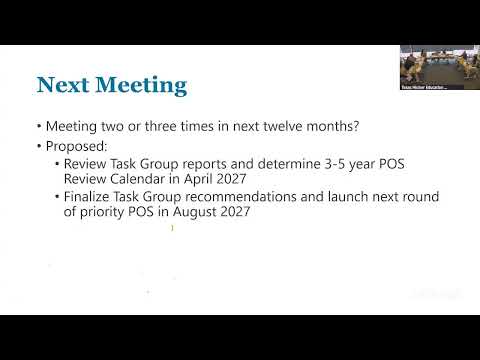
The committee directed staff to solicit nominations through September, finalize membership in October and begin convenings in November. Task groups are expected to meet two to three times between November and March and report back with recommendations in April, when the committee will consider forwarding proposals to THECB for approval.
The staff presentation emphasized that task groups will work from a data-driven starting point produced by a tri-agency analysis. Committee members discussed guardrails to keep work focused and prevent special-interest capture, and encouraged a one-for-one faculty-to-industry pairing where feasible.
Implementation: staff will issue calls for nominations for the first three prioritized clusters and return to the advisory committee in October with proposed guardrails and member lists.