Get Full Government Meeting Transcripts, Videos, & Alerts Forever!
Get email alerts on the Transportation Infrastructure topic
No spam. Unsubscribe anytime.
Transportation advisory committee reports nearly $130,000 in in-house repairs; '20 is plenty' program faces cost and enforcement hurdles
Summary
The Transportation Advisory Committee reviewed 2024 pavement work and neighborhood-traffic efforts, reported nearly $130,000 in in-house asphalt repairs, and discussed '20 is plenty' speed-limit proposals that would require capital outlay for signage and police enforcement consideration.
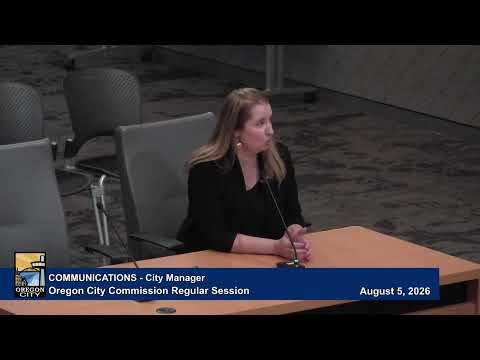
Timothy Morgan, vice chair of the Transportation Advisory Committee, presented the committee's annual report to the commission on Aug. 5, summarizing coordination with ODOT, pavement maintenance activity and neighborhood-traffic work.
Morgan said the public-works director presented the 2024 pavement maintenance report noting "nearly 130,000 in in house asphalt repairs," ongoing slurry-seal contracting and plans for grind-and-overlay paving on Malala Avenue in late 2026 after ADA ramp upgrades. The committee also told the commission it compiled vehicle-volume data on 20 representative streets to inform potential traffic-calming proposals.
Commissioners asked about the '20 is plenty' initiative (citywide 20 mph speed limits). Morgan said the idea had been tabled earlier because of limited police staffing for enforcement; Public Works Director Dana Webb said implementing 20 mph citywide would require replacing or installing 20-mph signs and carries a 'decent cost.' Webb added that without posted signage the statutory speed would remain 25 mph in residential zones and enforcement would be limited. Webb said staff could investigate potential grant opportunities and provide cost estimates back to the commission.
The commission thanked the Transportation Advisory Committee and public-works staff for the update and requested follow-up information on sign inventories, potential costs and enforcement options before advancing a citywide speed-change campaign.