Get Full Government Meeting Transcripts, Videos, & Alerts Forever!
Get email alerts on the Zoning topic
No spam. Unsubscribe anytime.
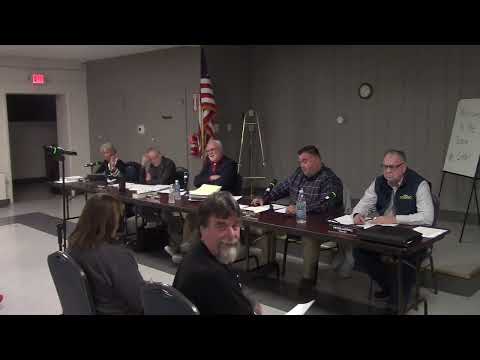
Residents and counsel clash over SEQRA timing as Highland Falls zoning law awaits scoping
Summary
At a Village of Highland Falls board meeting, residents pressed the board on why the State Environmental Quality Review (SEQRA) is being completed before a final vote on a proposed local zoning law; village counsel said SEQRA must be closed before adoption and a scoping document will define what environmental impacts to assess.
Highland Falls residents and the village's counsel debated whether an environmental review must be completed before the board adopts a proposed local zoning law.
Erin Helley, who said she was "contracted by the Association of Graduates," told trustees she did not understand why the board would complete SEQRA before settling on specific zoning numbers such as building heights or residential density. "If we haven't decided on the heights, we haven't decided on the density, how can SEQRA assess whether or not the height of a building that you haven't yet given them will impact the environment?" Helley asked (Speaker 11).
Village counsel responded that New York State law requires SEQRA be completed before adopting a local law and that the board must issue either a negative or positive declaration. Counsel said in consultation with the village engineer the board will prepare a final scoping document that "has to be adopted," and that if the local law undergoes significant change the board would need to reopen public hearings and recirculate SEQRA.
The exchange reflected deeper disagreement about past changes to the zoning code. Several speakers disputed whether a prior change that produced a 350-square-foot-per-dwelling reference was a "scrivener's error" or an intentional revision; some residents demanded written records. The board and counsel said the scoping document will list the specific parameters SEQRA will evaluate — for example, whether proposed density revisions require additional water- or school-capacity analysis.
Why it matters: SEQRA scoping determines whether a short-form (negative declaration) or a full environmental impact statement is required, and it can add time and cost to the adoption process. Counsel told the board that if the law's revisions are not significant the board can adopt after SEQRA is closed; if revisions are significant, public hearings and a new SEQRA review would be required.
Next steps: Counsel said staff will assemble the scoping documentation in consultation with the engineer and the board; residents urged the trustees to clarify which exact numeric changes the board will ask SEQRA to assess before moving to a final vote.