Get Full Government Meeting Transcripts, Videos, & Alerts Forever!
Get email alerts on the Recycled Water topic
No spam. Unsubscribe anytime.
Mendocino CSD approves expansion of recycled-water project using remaining $2.3 million in state grant funds
Summary
The Mendocino City Community Services District voted to expand its recycled-water system — adding roughly 3,300 feet of pipeline, additional hydrants and new service connections — to use about $2.3 million in remaining state grant funding; staff said the work requires only minor CEQA revisions and will not use general-fund dollars.
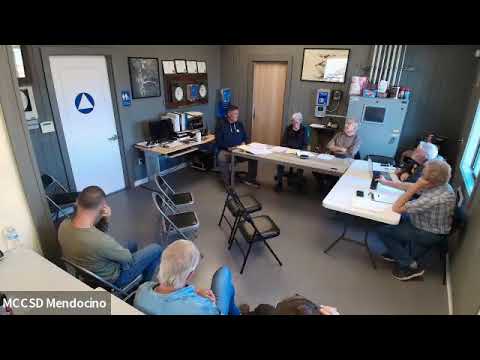
The Mendocino City Community Services District on Tuesday approved a resolution to expand its recycled-water project and use roughly $2.3 million in remaining state grant funds to build additional mains, hydrants and service connections.
Ryan, the district superintendent, told the board the construction contract was previously awarded to Giladi Construction for $9,218,230 and that because bids came in below the engineer’s estimate “we have approximately $2,300,000 in state grant funding that remains to be spent for additional eligible recycled-water construction costs.” Staff recommended using those funds to extend about 3,300 feet of recycled-water main within existing public rights-of-way, add recycled-water fire hydrants and provide new services for eligible users including the Cemetery District (Evergreen and Hillcrest), the California Department of Parks and Recreation restrooms at the Ford House, the Mendocino Volunteer Fire Department, irrigation upgrades at the Mendocino K–8 school and a private parcel on Howard Street.
Board members asked how contingencies and future change orders would be handled; Ryan said a standard construction contingency is about 10% and estimated combined contingency for the project phases would be roughly $1.1 million to $1.15 million. Legal counsel explained that any private property receiving service must sign a user agreement and comply with regional rules, including a prohibition on use within 50 feet of a domestic well.
Staff and legal counsel also told the board the expansion “does not create new significant environmental impacts beyond those already evaluated” and would not require a supplemental mitigated negative declaration under CEQA. Ryan said the project is expected to be fully funded with the remaining recycled-water grant funds and that no MCCSD general-fund expenditure is anticipated.
Chair moved adoption of Resolution 2026-333 to approve the expansion, determine no further CEQA documentation was required, and authorize solicitation of bids; the motion was seconded and recorded votes in favor were entered by board members Andrea, Matthew, Alex and Michael. The resolution passed.
The district will solicit bids for the expansion and proceed with design details, including which private parcels will receive funded service connections, subject to grant rules and user agreements.