Get Full Government Meeting Transcripts, Videos, & Alerts Forever!
Get email alerts on the Darpa Grand Challenge topic
No spam. Unsubscribe anytime.
DARPA Grand Challenge praised as a rapid accelerator for technological innovation
Summary
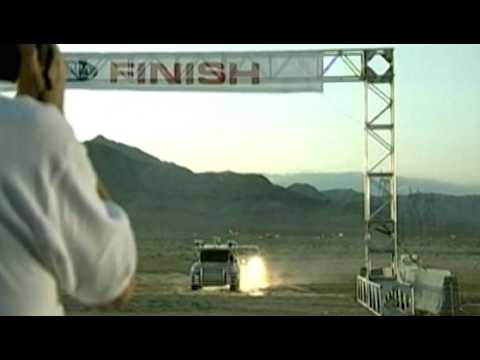
Presenters at the session said the DARPA Grand Challenge’s prize-based format drives rapid technological advances by setting a clear finish line and inviting nontraditional teams to pursue high-risk ideas. Speakers emphasized the program’s role in pushing both military and civilian innovation.
Presenters at the session argued that the Defense Advanced Research Projects Agency Grand Challenge is a particularly effective mechanism for speeding technological progress, saying the prize-based format gives teams a clear target to pursue. "The DARPA Grand Challenge is a prize based competition that, in my opinion, is 1 of the best ways to accelerate technological innovation and breakthroughs," said Presenter (Speaker 1).
Speakers described the challenge format as intentionally open-ended and oriented toward high-risk, high-reward efforts. "We are a high risk, high reward organization. That is how we work," said Presenter (Speaker 2), who added that the agency looks for ideas that could change scientific understanding and the fundamentals of technology. Presenter (Speaker 1) noted the lack of a prescribed solution in challenge-style contests, saying that approach "encourages small startups, nontraditional thinkers, and garage innovators to take the kind of high risk swings that might not survive standard government design review."
Presenter (Speaker 3) framed the program’s broader impact, saying, "DARPA is unique among the innovation organizations in The United States and around the world," and asserting that a challenge of this sort can "redefine the world" and change operations on both the military and civilian sides. The transcript includes no recorded vote or formal action; the remarks are presented as advocacy and explanation of the challenge model rather than as a policy proposal.
The session focused on describing the rationale for challenge-based prizes and their potential to attract unconventional teams; no budgetary figures, timelines for a specific new prize, or formal decisions were included in the available transcript.