Get Full Government Meeting Transcripts, Videos, & Alerts Forever!
Get email alerts on the Pier Application topic
No spam. Unsubscribe anytime.
Conservation commission denies Shoestring Bay pier application over cumulative‑impact gaps
Summary
The Mashpee Conservation Commission voted 3–1 to deny a permit for a proposed private pier at 61–67 Shoestring Bay Road, citing insufficient cumulative‑impact analysis, DMF concerns about permanent marsh loss, and unclear construction methods.
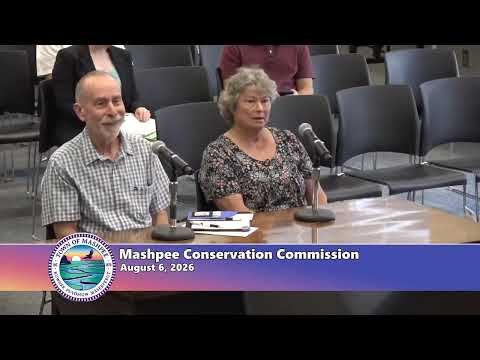
The Mashpee Conservation Commission voted 3–1 on Aug. 6 to deny without prejudice the permit application for a private pier at 61–67 Shoestring Bay Road, citing unresolved cumulative‑impact and fisheries concerns.
Commissioner Paul read five formal findings into the record that focused on gaps in the administrative record, including that the applicant’s peer review “expressly stated … assessing cumulative impacts was beyond the scope of his review,” and that the Division of Marine Fisheries (DMF) concluded “some impacts would be unavoidable and permanent, including direct salt marsh displacement and associated effects on fisheries access and bordering shellfish habitat.” The commission found the filing lacked a meaningful comparison of alternative alignments and a sufficient site‑specific fisheries and shellfish analysis.
During deliberations commissioners criticized the construction plan as unclear about pile installation methods, equipment weights, temporary marsh disturbance and monitoring standards. Commissioner Paul said the plan’s “100‑foot review radius” was not justified and noted the commission’s regulation allows evaluation out to 300 feet for dock and resource information. Shawna moved to deny the application without prejudice; Paul amended the motion to cite specific bylaw and regulation sections that aligned with his five findings. The amended motion passed on roll call, 3–1.
The denial requires staff to prepare the written order on a short timetable; commissioners volunteered to draft and review language so the order can be certified and mailed within the statutory window. The applicant may revise and refile addressing the referenced deficiencies.
Who spoke: The denial motion and findings were developed and explained primarily by Commissioner Paul and Commissioner Shawna; the motion carried over Rich’s dissent. The commission’s decision was tied explicitly to missing cumulative‑impact analysis and DMF’s stated concerns about permanent marsh impacts.