Get Full Government Meeting Transcripts, Videos, & Alerts Forever!
Get email alerts on the Economic Development topic
No spam. Unsubscribe anytime.
Council hears ordinance to create local rules for new special alcohol permits; supporters say it will lower barriers for restaurants
Summary
Ordinance 2026‑18 would establish city guidelines and written commitments for state‑authorized special alcohol permits (historic/riverfront/three‑way); council discussed restaurant eligibility thresholds, living‑wage language, local ownership, and public commenters including restaurant owners and the Chamber urged adoption; ordinance moved to second reading Sept. 2.
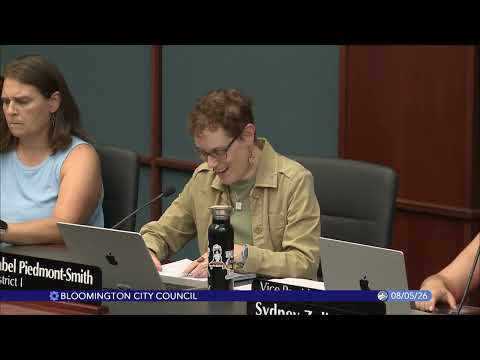
Councilmember Asari introduced Ordinance 2026‑18 to adopt guidelines and require formal written commitments from applicants for special three‑way/riverfront/historic permits newly available to Bloomington under state law (Senate Bill 89). Jane Cooper Smith, director of Economic and Sustainable Development, explained these permits are distinct from quota permits (they renew annually and are not transferable assets) and could lower entry costs for new restaurants.
Supporters speaking during public comment said the measure would lower a major barrier for new local restaurants by making special permits available at reduced cost compared with the secondary market. “These permits should serve the public interest in long term vitality of Bloomington's food and beverage community and not protect the private investment returns of a limited group of current owners,” said Uptown Cafe co‑owner Galen Cassin. Several council members cautioned that eligibility rules (a proposed 60% minimum food sales threshold) and any living‑wage compliance requirement should be carefully calibrated to avoid excluding desirable business models such as small wine bars or late‑night venues. Chamber representatives urged safeguards against speculation and operationally simple compliance standards.
After discussion and public testimony, council voted to send the ordinance to second reading on Sept. 2 to allow staff and stakeholders to refine definitions (restaurant threshold, good standing, living‑wage applicability) and correct a missing Exhibit A map. The ordinance will return with those clarifications and public input.