Get Full Government Meeting Transcripts, Videos, & Alerts Forever!
Get email alerts on the Wildfire Response topic
No spam. Unsubscribe anytime.
Salt Lake City fire leaders detail response upgrades and training after foothills blazes
Summary
Fire and emergency management leaders told a District 3 town hall they have trained hundreds of wildland-certified firefighters, expanded air-asset coordination, and are pursuing data-driven mitigation projects while seeking more staffing and apparatus to maintain 9-1-1 coverage.
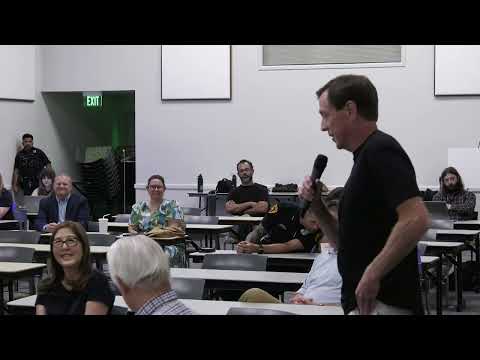
Salt Lake City fire and emergency management officials told residents at a District 3 town hall that recent foothills blazes have prompted a stepped-up emphasis on training, interagency coordination and targeted mitigation.
"We've trained over 200 firefighters in wildland firefighting to assist in our normal structure firefighting operations," said Ty Shepherd, division chief of emergency management. Shepherd described four operational priorities: response, evacuations, partnerships, and mitigation, and said the department maintains four wildland stations and firefighters with "red-card" wildland qualifications.
Chief Carl Levin said the city also conducts after-action reviews of major fires and is seeking additional firefighters and apparatus to avoid depleting resources during a wildfire while still covering routine 9-1-1 calls. "We do need more firefighters and more apparatus," he said, noting that rapid local response is critical to limit fire progression.
Officials described integration with county and state partners that allowed rapid dispatch of aircraft and air assets during recent incidents such as the Sanders fires. Shepherd said the cooperative wildfire system has improved air-asset dispatch and unified incident command, which materially shortens response time.
The department emphasized public education and defensible-space work as part of reducing risk in the wildland-urban interface. Shepherd urged residents to use the city's online resources and defensible-space assessments to prepare properties rather than rely solely on reactive measures.
Officials invited residents to request free defensible-space site visits and said mitigation priorities will be set through a community wildfire preparedness plan (CWPP) now in development.