Get Full Government Meeting Transcripts, Videos, & Alerts Forever!
Get email alerts on the State Legislation topic
No spam. Unsubscribe anytime.
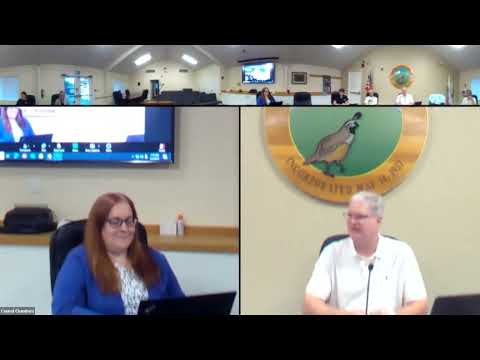
Monte Sereno council unanimously authorizes mayor to send opposition letter on SB 707
Summary
City staff briefed the council on SB 707, a proposed amendment to the Brown Act that would require remote participation and expanded translation obligations; after questions about county thresholds and small-city burdens, the council voted unanimously to authorize a letter opposing the bill.
City staff provided a summary of Senate Bill 707 and its potential effects on local meeting procedures, and the Monte Sereno City Council unanimously authorized the mayor to send a letter opposing the measure.
Diana, a city staff member, told the council that "SB 707 was introduced in a California state senate. If adopted, this bill would amend the Ralph M Brown Act regulating public meetings. The bill would require that all public meetings allow for telephone and online remote viewing and participation, required translations for meeting agendas when more than 20% of the residents of a jurisdiction have limited English proficiency and expand outreach and agenda access." Council members then questioned how translation triggers would apply if county-level language thresholds differ from local demographics.
Several council members said the bill’s one-size-fits-all approach could impose disproportionate costs on smaller cities. One member suggested exploring a separate legislative change to broaden closed-session exceptions for narrowly defined contract or procurement matters. After a brief public-comment period with no speakers, a council member moved to authorize the mayor to send the draft opposition letter; another council member seconded the motion and the motion passed unanimously.
The vote authorizes the mayor to transmit the draft letter opposing SB 707 to the appropriate state legislative offices. The council did not record a roll-call breakdown in the discussion beyond the unanimous passage; staff said they would return with implementation impacts if the bill advances.