Get Full Government Meeting Transcripts, Videos, & Alerts Forever!
Get email alerts on the Transmission Project topic
No spam. Unsubscribe anytime.
Otter Tail Power outlines Big Stone South–Alexandria transmission route through Douglas County
Summary
Otter Tail Power presented regulatory and construction updates for the Big Stone South–Alexandria transmission project, saying the Minnesota PUC set a study corridor while the company will seek 150-foot easements; construction is targeted for late 2027–early 2028 with service by end of 2030.
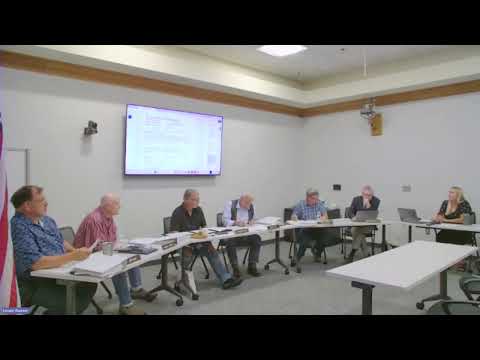
Otter Tail Power told the Douglas County Board of Commissioners that the Big Stone South–Alexandria (BSSA) transmission segment has cleared major regulatory steps and that the company is beginning right-of-way work in county townships.
"We're through the Minnesota Public Utilities Commission routing process," said Josh Humbert, senior project manager for Otter Tail Power, summarizing the PUC decision that set a route width after an environmental review and administrative-law process. He said the project previously received a combined certificate of need in October 2024.
Humbert said the approved technical corridor can be wide in places—up to about 1,000 to 2,000 feet in sections—to give planners flexibility, but Otter Tail and its co-owner agent will seek about 150-foot permanent easements from landowners. "The permittees ... are only going to be asking for a 150 foot of easement, but this thousand foot corridor gives us a wider area to work with landowners and work around their concerns," he said.
He outlined next steps: land agents have begun outreach and right-of-entry and easement negotiations will proceed through the coming year; environmental field surveys and geotechnical borings will be carried out at planned structure locations. "We're looking at a construction start date around the 1st of 20 28 or maybe late 20 27," Humbert said, and he said the company expects to commission the full line and put it in service by the end of 2030, followed by cleanup and restoration work.
Humbert described typical structure details: drilled-pier foundations roughly 7 feet in diameter and 50–70 feet deep, with about 4–6 structures per mile (roughly 800–1,000 feet between structures). The poles will be self-supporting, weathering steel (brown) and double-circuit capable, though only the first circuit will be strung as part of this project.
Commissioners asked about cultural-resource protections, water-table and drilling issues, and staging yards. Humbert said archaeological surveys will be used to identify artifacts and that the project would shift structures to avoid sensitive finds when feasible; geotechnical work will identify groundwater and inform foundation and pouring techniques.
Humbert invited follow-up questions and provided contact access for landowners and staff seeking more detail.
Provenance: This article draws on the presentation and Q&A given by Josh Humbert to the board (topic introduced at SEG 002; discussion continues through SEG 285).