Get Full Government Meeting Transcripts, Videos, & Alerts Forever!
Get email alerts on the Municipal Finance topic
No spam. Unsubscribe anytime.
Council asks finance committee to study refunding of $9M public‑works bond
Summary
Consultants told the council refinancing the city's November 2023 $9 million lease‑revenue bond could lower annual debt service or shorten the term; the council directed the finance committee to evaluate options and vendor/bank approaches so the city can act if market conditions are favorable.
Consultants presented three practical options for refunding the $9 million lease‑revenue bond sold in November 2023 and left the council with a single clear directive: ask the finance committee to study the options and be ready to act if the market provides sufficient savings.
Jeanette Harris of Science Public Finance explained why municipalities refund bonds — typically to realize net present‑value interest savings, change cash‑flow profiles or adjust legal covenants. Mark Anderson walked through numbers tied to South Weber's public‑works bond, noting the bond's current true‑interest cost is roughly 5.04% and annual payments are about $706,000. Anderson presented three scenarios: reduce yearly payments (cash savings near $80,000 annually in one example), use about $800,000 of unspent proceeds to lower the amount refunded and thereby lower payments further, or maintain current annual payments to pay off the loan several years earlier.
Council members asked detailed questions about rules, costs and timing. One question was whether the $800,000 of unspent bond proceeds could be invested and used as a balloon payment; the consultant cautioned against that, saying the IRS would treat such arbitrage unfavorably. The consultants also estimated cost‑of‑issuance and transaction fees would be in the neighborhood of $85,000 for a market transaction and explained how call protection and prepayment mechanics affect flexibility.
"Any one of those options could be structured with different tradeoffs between cash‑flow and total principal and interest paid," Anderson said. "You also have the option of checking with Bank of Utah to see if they would offer a lower rate while preserving call flexibility, which some councils prefer."
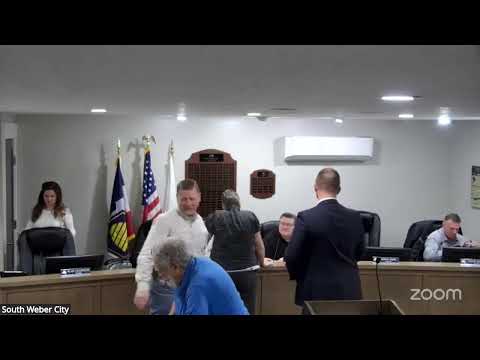
By the end of the exchange several members voiced support for pursuing an analysis rather than taking immediate action. The mayor asked whether the council was interested in pursuing refunding at this time; the chair reported consensus to have the finance committee evaluate specifics and bring back a recommendation. The committee will review market alternatives, fees, and whether to take savings as lower annual payments, shorten the term, or use unspent proceeds at closing.
Next steps: the finance committee will analyze transaction scenarios and vendor/bank options and return to council with recommendations and estimates for net present‑value savings and expected issuance costs.