Get Full Government Meeting Transcripts, Videos, & Alerts Forever!
Get email alerts on the Bond topic
No spam. Unsubscribe anytime.
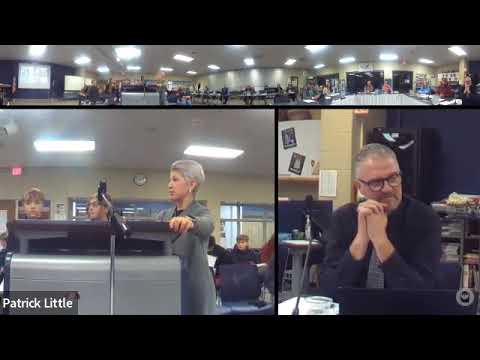
Community speakers urge board to scale back $24M bond request, focus on essential needs
Summary
Public commenters and several board members debated a proposed $24 million bond, urging the board to prioritize elementary-school needs and maintenance over optional projects and to consider reducing the ask to about $17–$18 million.
Several residents and at least one board member urged the Boyne City School Board to separate needs from wants in a proposed $24 million bond and consider a reduced ask focused on essential maintenance and elementary-school improvements.
Chris Bridgeton (speaker 8) told the board he was not opposed to a bond but warned the district was accumulating multiple large asks: “So now we're faced with a $24,000,000 proposal. So now we're 8 years in from the 2,016 bond proposal… that means we'll effectively ask for $60,000,000 from the taxpayer over the last 8 years,” he said, citing prior bond totals from 2016 ($10,315,000) and 2020 ($26,285,000). Bridgeton asked the board to scale the current request back to roughly $17–$18 million to focus on what he called needs rather than wants.
Another resident who identified himself as Chuck (speaker 9) said he supports education spending but urged transparency about what constitutes a need; he noted past local fundraising had been proposed to cover a field house and asked the board to prioritize single-purpose projects if they are genuine needs. Erin (speaker 7), speaking as an educator and parent, said the elementary work was “a reorganization” to create safe, usable learning spaces rather than an expansion and urged the board to view those elements as needs.
Board members and staff discussed financing options, term lengths and the trade-offs between borrowing less and shortening repayment terms. Staff cautioned that lowering debt mills now can leave districts with no available debt capacity later if future needs arise, while some board members argued shorter terms or a smaller ask would reduce taxpayer burden. The exchange framed the rest of the meeting’s debate over the bond resolution and how projects might be phased.