Get Full Government Meeting Transcripts, Videos, & Alerts Forever!
Get email alerts on the Training Policy topic
No spam. Unsubscribe anytime.
Hillsdale board adopts annual harassment and workplace-violence training for officials and volunteers
Summary
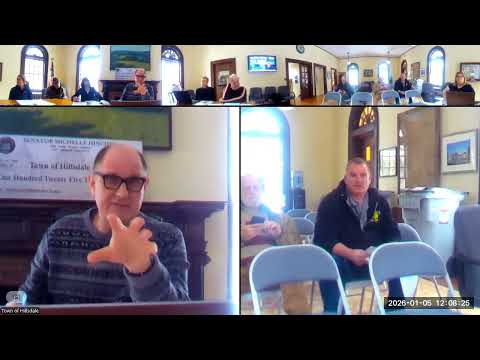
At its organizational meeting, the Hillsdale Town Board voted to require annual harassment/discrimination-prevention and workforce-violence training for all town employees, elected officials, staff and committee members, with in-person sessions prioritized and an online vendor as backup.
The Hillsdale Town Board voted unanimously at its organizational meeting to require annual harassment and discrimination prevention training and workforce-violence training for all town employees, elected officials, staff and committee members. Chair (speaker S1) read the revised language into the record and set a July 1 deadline for online make-up training where in-person attendance is missed.
Board members debated logistics and vendors during the discussion. One committee member (speaker S4) criticized the town's current vendor, saying the course was cumbersome and suggested alternative online seminars and in-person sessions. S4 said the current vendor "is the insurance provider, so it's maybe a little conflict of interest," and recommended using internal liaisons or a designated staff person to run live trainings. Chair (S1) said the board would designate liaisons and noted that the NIMR online module would remain available as a fallback for those unable to attend live sessions.
The board directed committee chairs and liaisons to schedule training within the first quarter of the year and to track completion. Chair (S1) said participants who miss in-person sessions must take the NIMR interactive training by July 1. The policy language adopted places primary responsibility for scheduling and enforcement with committee chairs and board liaisons, with the board retaining oversight.