Get Full Government Meeting Transcripts, Videos, & Alerts Forever!
Get email alerts on the Farmland Preservation topic
No spam. Unsubscribe anytime.
Residents and Soil & Water push Haywood Working Lands Fund to preserve farms
Summary
Public commenters and Soil & Water presenters urged the Haywood County Board of Commissioners to dedicate present-use rollback tax revenues to a Haywood Working Lands Fund to serve as local matching funds for conservation easements and other costs. The board signaled plans to place a draft resolution on a future agenda for adoption.
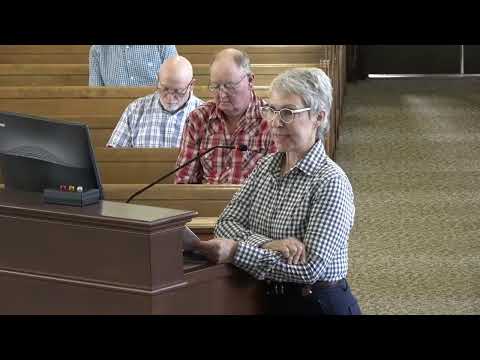
Public comments and a Soil & Water presentation on Jan. 3 focused on a proposed Haywood Working Lands Fund that would use present-use rollback tax revenues to provide matching funds for farmland preservation grants and to cover easement transaction costs.
"This proposal represents a practical, fiscally responsible investment in one of Haywood County's greatest assets, our working farms," said Mandy Stacy, who urged the board to support a modest annual appropriation (she suggested $25,000 to $50,000) that could multiply private and state conservation dollars. Ted Carr, a Bethel community resident, asked the board to "put the deferred tax, not in the general fund, but in a preservation fund" to create local matching capacity. Dwayne Van Hook, director of the Haywood Soil and Water Conservation District, presented a draft concept and resolution that would designate rollback revenues as a funding source and allow the district to act as easement holder.
Presenters and commissioners discussed implementation details: eligible uses would include appraisals, surveys, legal work, environmental assessments and monitoring; the district would monitor easements annually; and the county could choose how much to appropriate from the fund each year after audits indicate available balances. Bill Yarbrough, chair of the Soil and Water board, said the district has the staff and experience to serve as easement holder and monitor long-term compliance.
Commissioners signaled broad support and directed staff to return a draft resolution for formal adoption at an upcoming meeting. Board members also asked staff to study options for expanding local revenue — including a small property- or sales-tax dedication — to increase match capacity for larger grants such as the state "ag opportunity" match discussed in the presentation.
What happens next: commissioners said they expect to place a draft resolution on a future meeting agenda (the presenters indicated the draft could be considered for a vote at the next scheduled meeting), and staff will develop recommended guardrails for eligibility and administration.