Get Full Government Meeting Transcripts, Videos, & Alerts Forever!
Get email alerts on the Upepa topic
No spam. Unsubscribe anytime.
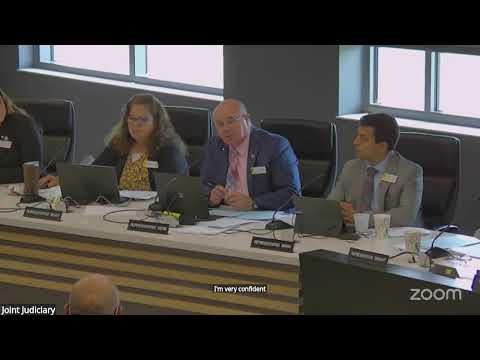
Advocates, industry and trial lawyers split over anti‑SLAPP details at committee hearing
Summary
A range of witnesses — from a congressional‑campaign defendant and conservative policy groups to the Motion Picture Association and the trial lawyers — offered differing views on religious‑expression coverage, attorney‑fee shifting and immunity in the UPEPA draft.
Stakeholders gave contrasting perspectives at the committee's UPEPA hearing. Michelle St. Louis, who described being sued over campaign speech, urged protections that would help private citizens defend against costly suits and suggested the draft explicitly protect religious expression: "I am currently being sued by a congressional candidate... It puts a chill on free speech in this lawsuit," she said.
Policy groups argued about the statute's structure. Parker Jackson of the Goldwater Institute described proposed edits to make the statute "substantive" in federal court and suggested adding immunity language modeled on Pennsylvania; he argued an immunity approach would let courts treat the protection as a substantive right rather than a purely procedural tool. By contrast, Ben Scheffner of the Motion Picture Association, who worked on the UPEPA drafting committee, said mandatory fee shifting is crucial to deter meritless litigation and cautioned against importing protected‑speech analysis into the first, procedural stage of the bill. "If a defendant prevails on an anti‑SLAPP motion, that defendant should automatically get his or her attorney's fees," Scheffner said.
Trial lawyers and other public‑interest speakers raised different concerns. Marsha Shaner of the Wyoming Trial Lawyers Association urged an exception for personal injury claims to ensure victims retain access to civil remedies. Committee members pressed witnesses on how the bill would function in federal court and whether defining "communication" or explicitly including religious expression would create unforeseen consequences. After debate the committee adopted several targeted amendments but tabled broader structural changes, including a stand‑alone immunity insertion that failed to win approval.