Get Full Government Meeting Transcripts, Videos, & Alerts Forever!
Get email alerts on the Ebike Legislation topic
No spam. Unsubscribe anytime.
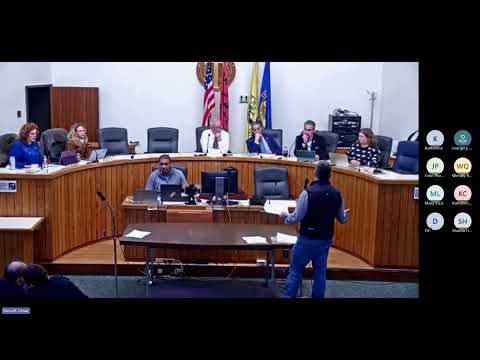
Local shop owner urges Tenafly leaders to press state for fixes to new e‑bike law
Summary
Shepherd Grinker, a Tenafly resident and local business owner, told the council the new New Jersey law (S4834/A6235) conflates low‑speed e‑bikes with high‑powered eMotos, creating enforcement confusion, registration and insurance gaps, and economic harm to local shops.
Shepherd Grinker, who identified himself as a Tenafly resident and local business owner, told the council the recently signed state bill (S4834/A6235, Jan. 19) conflates distinct types of electric vehicles and creates “confusion and most importantly a misalignment with actual safety risks.”
Grinker said low‑speed electric bicycles — devices designed for transportation and recreation that are capped at about 20 miles per hour — are being treated the same as high‑powered eMotos, which “can be dangerous” and behave more like motorcycles. “They can be dangerous, they can reach dangerous speeds and they present real safety risks,” he said, while urging that eMotos be regulated separately.
He warned the law’s requirements for registration, licensing, road tests and insurance do not match current systems. “The law requires registration, licensing, and road tests, insurance, but the systems are currently not in place,” Grinker said, adding that MVC information currently shows a wait list rather than an active registration process.
Grinker described economic impacts on local businesses, saying customers are returning e‑bikes and retailers are seeing sales evaporate. “My business is tanked since this law passed,” he told the council, and said some shops are moving inventory out of state because of customer uncertainty.
During a council Q&A, presenters including Sandy Chapman (introduced by Grinker as a coalition organizer) and council members discussed federal and state roles in regulation, the difficulty of distinguishing modified low‑speed models from high‑speed eMotos, and the need for police and community education. Chapman and Grinker urged the council to contact state legislators and to help arrange local briefings for police and traffic officers.
The presenters asked the borough to encourage lawmakers to adopt a safety‑focused fix that restores federal‑aligned definitions for low‑speed e‑bikes and reserves motor‑vehicle rules for true eMotos. Council members thanked the speakers and agreed to follow up offline to collect additional information.
The council did not take action on the issue during the April 7 meeting.