Get Full Government Meeting Transcripts, Videos, & Alerts Forever!
Get email alerts on the Budget Forecast topic
No spam. Unsubscribe anytime.
Board hears five‑year forecast, cites House Bill 186 impact and places 0.5% earned‑income tax on November ballot
Summary
Treasurer presented a five‑year forecast showing a revenue shortfall tied to House Bill 186, estimating a $1.2 million hit this year and up to $3.8 million through 2031; the board approved the forecast and a 0.5% earned‑income tax will appear on the Nov. 3 ballot.
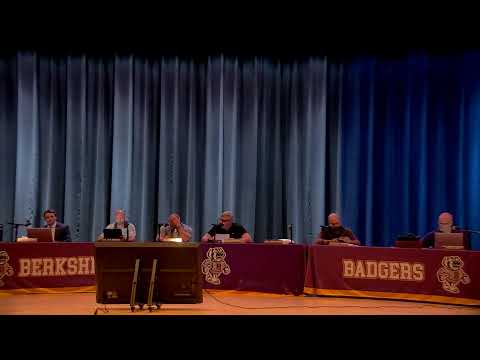
The Berkshire Board of Education approved a five‑year financial forecast after a presentation from the district treasurer showing significant revenue losses tied to recent state property‑tax changes.
"We estimate that House Bill 186 will cost us about $1,200,000 this fiscal year and possibly $3,800,000 through the end of fiscal year '31," the treasurer (S3) told the board during the forecast presentation. He said the timing of the state's implementation and retroactive credits will affect settlement timing and district cash flow.
The treasurer explained the law limits growth tied to reappraisals and includes a temporary tax‑credit provision that will retroactively reduce property tax revenue for districts that had reappraisals in tax years 2023 and 2024. He said the district used conservative estimates and that, because the rollout was delayed, the district will see a 1.5 rate this year as the state catches up.
As a response to the projected gap, the board has placed a 0.5% earned‑income tax on the November 3 ballot. "We have placed a point 5% earned income tax on the ballot for November 3," S3 said, framing the referendum as a local revenue option to address an expanding share of school funding borne by local taxpayers.
The presentation included charts illustrating the district's projected cash balance declining after fiscal 2028 and the long‑term shift from state to local funding: the treasurer noted local revenue is estimated at about 66% of total district revenue for fiscal year 2027. He warned that, under the forecast assumptions, days‑cash could run negative by fiscal 2029.
The board voted to approve the forecast and the presentation concluded with no recorded dissent to the motion. Next steps noted in the meeting record include submitting the forecast to the state Department of Education by the end of the month and monitoring future settlements related to the state's implementation schedule.