Get Full Government Meeting Transcripts, Videos, & Alerts Forever!
Get email alerts on the Energy Storage topic
No spam. Unsubscribe anytime.
Battery storage presentation draws months of community concern; residents urge moratorium and independent review
Summary
New Leaf Energy's overview of lithium‑ion battery systems prompted lengthy public comment raising safety, flood‑zone, evacuation, insurance and environmental concerns. Residents urged the board to pause consideration, seek independent analysis and protect homeowners adjacent to the proposed site.
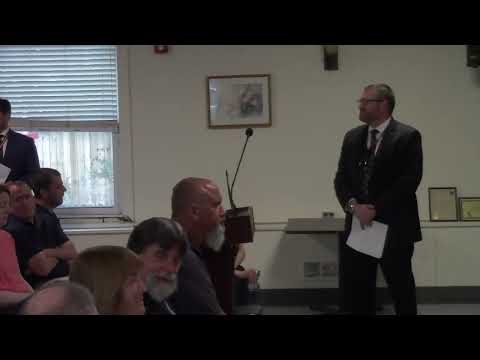
New Leaf Energy presented high‑level information about battery energy storage systems, describing how 5 MW facilities are sized and the safety layers developers use, including battery management systems, thermal management, UL testing, third‑party peer review, site‑specific emergency response plans and a dedicated hazard‑support team that the presenter said would be able to deploy within 15 minutes in the event of an incident (speaker 15).
The presenter emphasized the company has not signed an LOI for a site, that no final site design exists and that any project would require state fire‑code approvals, environmental assessments and significant coordination with local first responders. "We do not have a project site here... there is no LOI assigned," New Leaf said, and the developer framed the discussion as an exploratory, community‑engagement step (speaker 15).
Public comment that followed included a mix of technical and personal appeals: residents who lost homes in the July flood said they fear placing a battery facility near known flood paths and water‑infrastructure, worried about evacuation routes and possible contamination from a fire. One health‑care professional urged a temporary moratorium to allow independent safety and emergency‑response planning: "Given the proximity to houses and the unique characteristics of our community, I believe it would be reasonable and responsible for the village to consider a temporary moratorium while additional review... can occur" (Tiffany Kelly, speaker 14). An environmental and community group letter read into the record called on the village to deny approval because of the risk of prolonged fire events and air emissions (Protect Orange County Now, speaker 10). Residents repeatedly asked whether the village would receive $2,000,000 in lease payments and how bond, letter‑of‑credit and decommissioning protections would be structured; the mayor said those terms were part of preliminary LOI language and that any formal proposal would trigger planning, environmental and legal review.
Board members and the presenter discussed peer‑review, use of lithium‑iron phosphate chemistry to reduce thermal risk, enclosed designs and the state's fire‑safety working group created after the Warwick incidents. The mayor closed by thanking residents for robust input and said the board was treating the meeting as part of an extended public engagement process before any formal action.