Get Full Government Meeting Transcripts, Videos, & Alerts Forever!
Get email alerts on the Teacher Apprenticeship topic
No spam. Unsubscribe anytime.
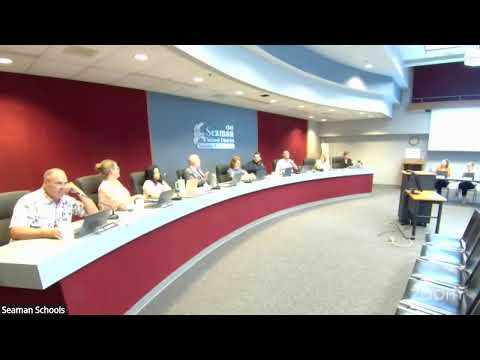
Seaman board hears paid teaching‑apprentice proposal to recruit local teachers
Summary
A Seaman USD 345 teacher proposed a paid youth apprenticeship that would enroll high‑school students in college CEP courses, pay apprentices while they learn in K‑12 classrooms, and use a state $2,750 annual stipend to reduce college costs; board members asked about qualifications and reimbursement mechanics.
Tatiana Dowling, a Seaman teacher, presented a plan to create a paid teaching‑apprentice pathway through Kansas’ registered youth apprenticeship program, aiming to recruit and produce locally trained teachers for Seaman USD 345.
Dowling said apprentices would be enrolled while taking normal high‑school classes and would spend a portion of the day in elementary classrooms as paid district employees. She described a partnership with Washburn University under the district’s CEP arrangement to expand college‑credit offerings and a weekly mentor checklist developed with Washburn staff to standardize training and competency assessment. “The state of Kansas supplies each mentor every year or each apprentice every year with a $2,750 stipend or scholarship for their college classwork,” Dowling said, noting the stipend and reduced Washburn tuition make the pathway more affordable for students pursuing teaching careers.
Board members pressed for implementation details. Dowling said the classroom apprenticeship portion would start in junior and senior year, with pilot students already identified among seniors. She described how the district would initially front tuition costs and later apply for state reimbursement through the registered youth apprenticeship program, and mentioned workforce partners that might help reimburse wages for qualifying students.
Supporters on the board praised the local pipeline approach; one member asked for the mentor handbook and other documents Dowling prepared. Dowling said she and district staff planned to complete paperwork with KSDE pending board approval and that the program could grow from elementary placements to include secondary placements in future years.
The presentation concluded with requests for follow‑up: board members asked for the mentor handbook, a schedule of when apprentices will be in classrooms, and clarification about eligibility and evaluation rubrics. No formal action was taken at the meeting; Dowling said she would bring paperwork forward for official approval at a subsequent meeting.