Get Full Government Meeting Transcripts, Videos, & Alerts Forever!
Get email alerts on the Zoning topic
No spam. Unsubscribe anytime.
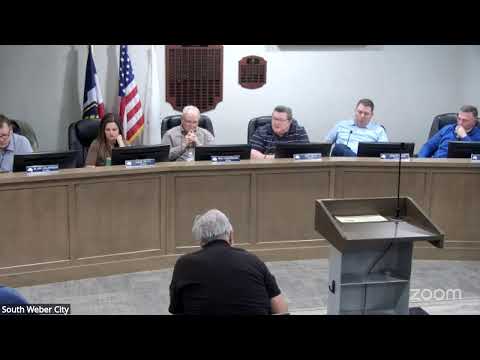
Council approves Peak Subdivision rezoning after questions about packet inconsistencies and safety
Summary
The South Weber City Council on March 10 approved Ordinance 26-04 to rezone the Peak Subdivision to residential zones while members and residents pushed staff on inconsistent acreage and missing parcel descriptions and on whether traffic and safety analyses should come before rezoning.
The South Weber City Council on Tuesday approved Ordinance 26-04, rezoning approximately 34.635 acres near 898 East 7240 South from agricultural to municipal residential designations, after council members negotiated language tying density to the current concept plat.
Residents and several council members had warned the packet contained inconsistent figures and incomplete legal descriptions. Paul Straz, a South Weber resident who reviewed the ordinance and exhibits, told the council the ordinance and staff report list 34.635 acres while the concept layout and exhibits show conflicting acreages, and he said Parcel 130210150 lacks a legal description. "When the ordinance, the exhibits, and the concept plan don't align...the only responsible action is to deny the rezone and require a complete, consistent, and safe application," Straz said.
Lance, the city planner, told the council the reduced request had landed on 34.635 acres and that the two legal descriptions provided by the applicant add to that number. He described the typical land-use sequence: rezoning first, then preliminary plat and subdivision studies to address roads, utilities, traffic, schools and stormwater. Council members pressed staff on whether approving zoning before thorough traffic and school impact analyses would leave the city with limited leverage at the subdivision stage.
After discussion, the mover clarified the approval would be tied to the lot density shown on the current plat. The council then voted to approve the ordinance. The public record shows the planning commission had recommended approval at its February hearing, and staff noted the city remains the final legislative approval body.
Next steps: if no appeals are filed, the applicant may proceed to preliminary plat and subdivision review, where technical studies and mitigation measures will be required before final plat approval.