Get Full Government Meeting Transcripts, Videos, & Alerts Forever!
Get email alerts on the Cormorants topic
No spam. Unsubscribe anytime.
DEC biologist outlines cormorant behavior, limited management options on Lake George
Summary
New York State DEC wildlife biologist John O'Connor described double-crested cormorant diet, nesting behavior and the constrained federal permitting environment that limits lethal or nest-destruction management absent documented impacts to species of conservation concern.
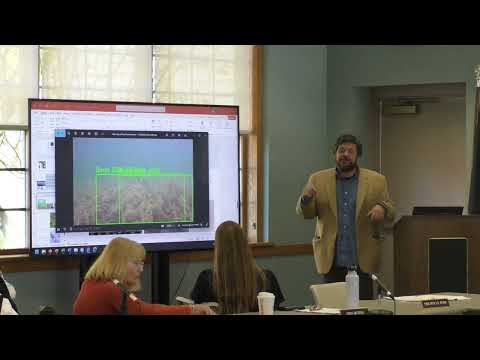
John O'Connor, a wildlife biologist with New York State Department of Environmental Conservation Region 5, presented an overview of double-crested cormorant ecology, recent population trends, and management methods available to state and federal authorities. He traced population recovery from low levels after DDT to current abundances and said cormorants prefer shallow, schooling fish and often nest on islands that lack predators.
O'Connor said management tools are limited by federal permitting. He described oiling eggs as an effective, though logistically challenging, technique and explained why permits now restrict where agencies can carry out lethal control. “So we oil all the nest that we can reach from the ground...it works really effectively,” he said. He added that recent federal litigation required more restrictive permitting and that the DEC can apply for limited authority to manage sites only if there is demonstrable impact to other species or habitats listed on the permit.
Commissioners asked about the origin and movement of birds seen on Lake George; O'Connor said mixing and seasonal movement are not fully resolved and suggested telemetry would be needed to answer those questions. He recommended documenting roosts and nesting activity so DEC and partner agencies can build evidence for permit-driven management where appropriate.
The commission did not authorize new management actions during the meeting; the DEC presentation focused on monitoring and documentation needs to support potential future permit applications.