Get Full Government Meeting Transcripts, Videos, & Alerts Forever!
Get email alerts on the Burn Ban topic
No spam. Unsubscribe anytime.
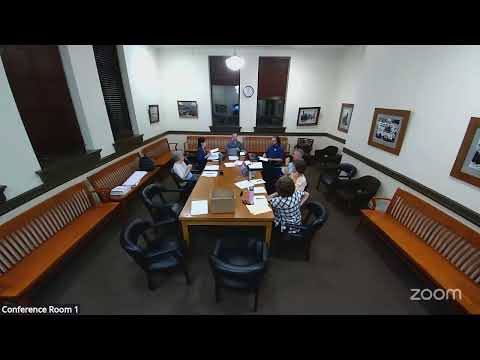
Kingston committee debates temporary burn ban tied to DEC high-fire-danger warnings
Summary
A local air-quality coalition urged a temporary ban on outdoor burning when the NYS DEC marks 'high fire danger'; committee members split between fire-prevention urgency and concerns about enforcement, staffing and whether education/notification is a better near-term step.
A representative of the Hudson Valley Air Quality Coalition urged the committee to ask the mayor and common council to enact a temporary ban on all outdoor burning when New York State DEC designates 'high fire danger' on its map, arguing Kingston’s dense wood-frame housing increases local risk. "We are urging the common council to enact a temporary explicit burn ban on all outdoor burning during times of high fire danger as designated by the New York State DEC fire danger map," the presenter said.
Committee members debated the proposal at length. Some members pointed to Kingston’s paid fire department and a reported three-minute response time, questioning whether a local ban would materially reduce risk or be enforceable; one committee member observed that the worst recent air-quality days were caused by wildfires far from Kingston and said enforcing a temporary ban would be operationally difficult. Others cited examples from California and Maui to argue that once a wildfire begins in high winds it can be uncontrollable and that reducing ignition sources is essential.
Members converged on a compromise rather than immediate ordinance adoption: several suggested a city resolution or an emergency-notification protocol that would trigger outreach and education when DEC’s map indicates high danger. Acting chair Benjamin Paul and staff asked the coalition to draft specific language outlining options — non-punitive public-notification steps, potential code amendments and any operational implications — and return to committee for further review. The committee did not adopt a ban that evening; members requested cost and staffing impacts for enforcement be outlined in follow-up materials.