Get Full Government Meeting Transcripts, Videos, & Alerts Forever!
Get email alerts on the Post Ian Rebuild topic
No spam. Unsubscribe anytime.
Post‑Ian rebuilding pushes LPA toward variances, deviations to make narrow lots buildable
Summary
Applicants and the town debated how Florida coastal lots damaged in Hurricane Ian should be rebuilt; applicants said code limits force RPDs and variances to restore homes on narrow, irregular parcels while staff emphasized strict variance criteria and drainage obligations.
Multiple applicants told the Local Planning Agency that rebuilding after Hurricane Ian has strained the existing land development code and forced property owners to request variances or specialized rezoning.
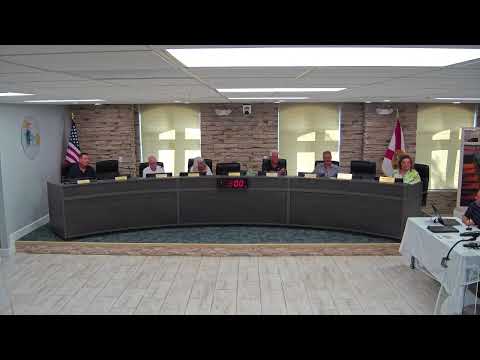
Attorney and staff remarks at the start of hearings emphasized the quasi‑judicial nature of the proceedings and the narrowness of variance criteria. Applicant representatives repeatedly framed variances and RPDs as remediation measures following the storm: "Reconstruction, we did not cause it because Hurricane Ian took the house out," an applicant representative said during variance discussion. The LPA heard that many lots on the island are irregular, were created by metes and bounds decades earlier, and that administrative interpretations of code sections have shifted over time.
Applicants described technical fixes — lot-line adjustments, storm‑chamber underground storage for runoff, and screening for mechanical equipment — as necessary to meet FEMA elevation, drainage, and marketability constraints. One applicant described an underground storm-chamber approach as "very nice, very easy, and, very expensive," explaining it allowed compliance with impervious-surface and drainage requirements while enabling larger building footprints.
Staff and the LPA emphasized that even where the building footprint increases through variances or deviations, on-site drainage and impervious-surface restrictions remain binding. Several board members pressed for clarity on when items qualify for expedited like‑for‑like review versus when they must be forwarded to town council, and staff confirmed the council will consider cases that do not meet strict like‑for‑like criteria.