Get Full Government Meeting Transcripts, Videos, & Alerts Forever!
Get email alerts on the Active Transportation topic
No spam. Unsubscribe anytime.
Cyclist urges city to rethink 'get off your bike' signs on downtown mall
Summary
A Charlottesville resident told the meeting the city's new 'get off your bike' signs on the downtown pedestrian mall feel demeaning and asked staff to consider yield language or marked bike crossings; staff said signs were installed at downtown business requests and invited input on the upcoming mobility plan.
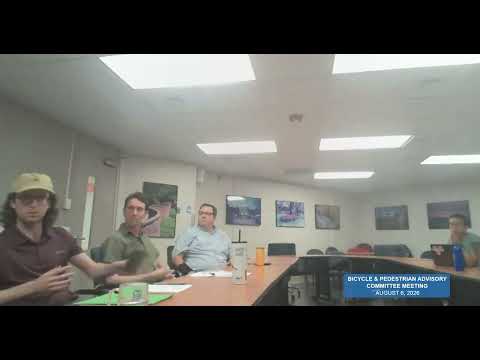
Jonathan Berlin, a Belmont resident who spoke during public comment, said recent signs on the downtown pedestrian mall have made his daily commute difficult and uncomfortable. "It's like it's fine. It just feels a little bit demeaning," he said, describing walking his bike across the mall rather than riding through it.
Ben Chambers, the city's transportation planning manager, told the committee the signs were deployed about a month earlier in response to safety concerns raised by downtown businesses. He said previous, larger brown signs listing many rules had been replaced with clearer 'get off your bike' notices. "About a month ago, we started deploying those signs out on the mall at the request of the downtown businesses and kind of folks downtown," Chambers said.
Chambers said the city would examine how crossings function when the mobility plan is developed over the next year and encouraged community members to engage in that process. He noted contraflow lanes proposed in the city's pedestrian and bicycle master plan are not yet in place for 4th Street Northeast and 2nd Street Northwest, which complicates routing for some cyclists.
The commenter suggested the city consider yield-based language or clearly marked bike crossings at a few locations, rather than an across-the-board prohibition, and asked whether the city had evidence of conflicts between pedestrians and cyclists that prompted the more restrictive signage. Chambers replied that the signs responded to feedback and safety concerns but said the mobility plan will be the appropriate venue to re-evaluate crossings and network changes.
The city did not propose an immediate ordinance change at the meeting; staff invited the commenter and other residents to provide specific locations for case-by-case follow-up and to participate in the mobility planning process.